Fifteen inches is one of those measurements that quietly governs more objects around you than you ever notice. It sits just three inches beyond a standard foot, landing in a sweet spot that kitchen tools, electronics, everyday accessories, and home items all seem to gravitate toward naturally.
Once you start recognizing this span inside a laptop screen, bowling pin, or cutting board, your ability to estimate and compare sizes without any measuring device sharpens considerably. This guide turns that abstract number into something genuinely concrete using objects you already own.
How Long is 15 Inches?
Fifteen inches equals one foot plus three extra inches slightly longer than a standard ruler and shorter than a typical rolling pin in full. It spans the width of a large cutting board, matches the diagonal of a laptop screen, and sits close to the height of a bowling pin. A cast iron skillet, serving tray, and rectangular baking pan all share this span in some dimension, making it one of the most quietly common lengths in everyday households.
15 inches = 38.1 cm = 381 mm = 1.25 ft = 0.381 m = 0.42 yd
Things That Are About 15 Inches Long or Tall
- US Dollar Bills
- 15-Inch Laptop Screen
- Bowling Pin
- Rolling Pin
- Large Pizza
- Rectangular Baking Pan
- Large Cutting Board
- Serving Tray / Small Serving Platter
- 15-Inch Cast Iron Skillet
- One Chef’s Knife
- Magnetic Knife Strip
- 15-Inch Adjustable Wrench
- Paper Clips (15x)
- Two Wooden Pencils
- Standard Soda Cans
- Five Hockey Pucks
1. Us Dollar Bills

A single US dollar note is about 6.14 inches long, meaning that placing two of them in a straight line gives a total length of roughly 12.28 inches, which is still a bit short of the desired measurement. Add half of a third bill and the combined span hits approximately 15.35 inches, landing remarkably close.
This makes dollar bills one of the most accessible pocket references imaginable. No tools, no guessing, just bills from your wallet laid flat on any counter or table.
Read: How Long Is 18 Inches In Real Life
2. 15-Inch Laptop Screen
There’s a clear reason 15-inch laptop screens have stayed so popular over the years: they hit a sweet spot between being easy to carry and offering plenty of viewing space. Creative pros, students, and home and business laptops users all gravitate toward this screen size because it handles multiple tasks without feeling bulky.
Measuring diagonally from corner to corner, it fits snugly into most bags, making it ideal for traveling. Unlike 13-inch or 14-inch options, this display size offers noticeably more workspace for productivity tasks like typing and watching videos. Desktop replacement notebooks and MacBook models confirm why consumers keep choosing this popular choice over alternatives.
3. Bowling Pin

Not every object in a bowling alley gets the engineering attention it deserves, but the standard bowling pin absolutely does. Under strict USBC rules, every certified pin must stand exactly 15 inches tall, ensuring consistency across every lane in the world.
Brands like Brunswick and QubicaAMF manufacture these to precise pin height standards so bowlers can aim with confidence.
This level of consistency plays a key role in determining how challenging and engaging the game feels.
When a bowling ball strikes a rack of pins set to exact design tolerances, the result is fair play not luck. Few realize this one dimension quietly governs the entire experience.
4. Rolling Pin
A well-chosen rolling pin quietly transforms baking from frustrating to fluid. Most home bakers prefer one sitting at 15 inches across wide enough for even pressure across large sheets of dough spreading without losing control.
Brands like Farberware and OXO have popularized the barrel style at this standard span because it fits most kitchen counters and aligns neatly with cutting boards and trays. Going shorter than 14 inches leaves edges unrolled; going longer becomes awkward on tighter surfaces.
5. Large Pizza

Ordering a large pizza in the USA means getting something that spans roughly 14 to 16 inches in diameter, crust to crust. Most pizzerias target this measurement because it serves 3 to 5 people comfortably, making it the go-to for family dinners and casual gatherings.
The circle of dough at this wide span creates meaningful surface space for toppings distributed across individual slices. Delivery boxes are engineered around this round width to prevent shifting during transport
6. Rectangular Baking Pan
The 9×13 inch baking pan is a staple in nearly every kitchen, but its diagonal measurement stretches almost exactly to 15 inches, a fact most bakers overlook entirely. This geometry explains why home baking trays and specialty pans at this span fit so reliably into small ovens without wasted storage space.
Whether you are making brownies, casseroles, cookies, or sheet cakes, this length accommodates daily cooking with a spacious yet practical footprint. Roasted vegetables spread more evenly here than in cramped alternatives. Even 12 inches feels noticeably tighter by comparison.
Read: How Long Is 11 Inches In Real Life
7. Large Cutting Board

A 15×20 inches or 15×18 inches board signals serious intent in any kitchen. Professional kitchens and serious home cooks both rely on this width because it delivers genuine chopping space without crowding kitchen counters. When you are handling family meals with multiple ingredients, adequate workspace is not a luxury — it is a necessity.
15-inch boards handle full meal preparation sequences from start to finish without shuffling ingredients awkwardly. Commercial kitchens rarely go smaller for primary prep stations, and that preference has filtered into daily home cooking culture.
8. Serving Tray / Small Serving Platter
A well-proportioned serving tray at this span handles drinks and snacks with enough balance for a confident grip without becoming unwieldy. Both oval and rectangular formats at this length give home entertainers a surface that feels safer to carry across a room.
For appetizers, desserts, and side dishes, serving platters of this size create a generous display space that reads beautifully on dining tables during dinner parties or holiday gatherings.
9. 15″ Cast Iron Skillet

Few pieces of cookware match the raw versatility of a cast iron skillet at this diameter. You can sear steaks, sauté vegetables, bake cornbread, broil fish, braise short ribs, fry eggs, or grill flatbreads all in one pan that moves effortlessly from stovetop to oven to campfire.
It qualifies as a true kitchen staple precisely because nothing about its cooking pan design is specialized. The all-around utility here is remarkable. Serious cooks treat this size as their primary workhorse, not a specialty item
10. One Chef’s Knife
A chef’s knife measuring this total length with a blade running 10–12 inches is the definitive all-rounder in any serious kitchen. It handles chopping, slicing, and dicing across meats, fruits, and vegetables without requiring a switch to specialized tools.
Most professional cooks reach for a 13-inch kitchen knife when handling larger tasks, but home kitchens rarely need that extra reach. Peeling knives handle the fine detail work, while this size owns everything in between
11. Magnetic Knife Strip
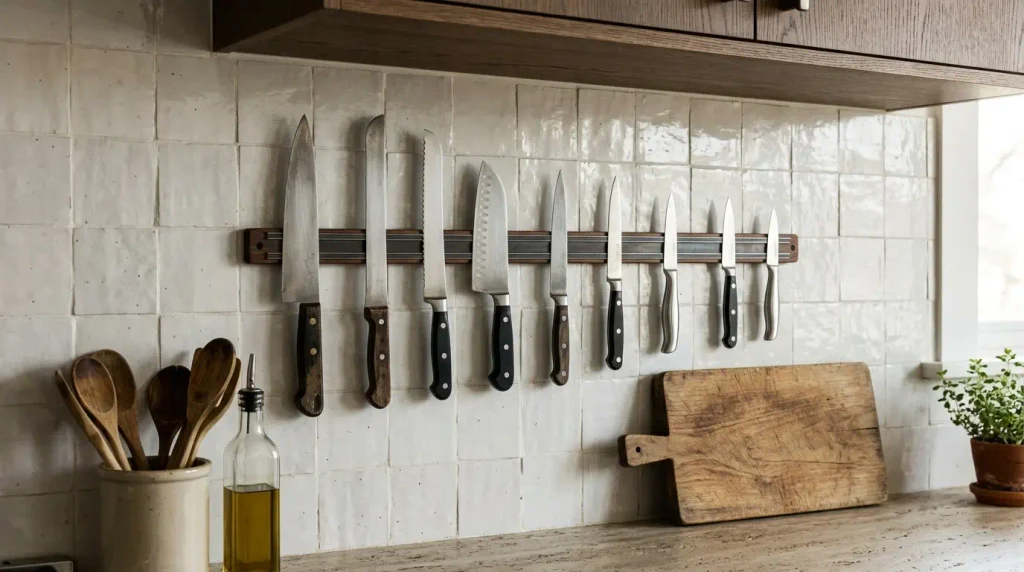
A magnetic knife strip mounted as a wall-mounted holder transforms how a kitchen functions at surface level. Rather than cramming metal knives into a block or drawer, this horizontal line of magnetic force keeps every blade visible, accessible, and in tidy storage.
Popular kitchen brands design these to sit flat against the wall, reclaiming valuable counter and shelf space entirely. The practical appeal extends beyond knives to tools like kitchen scissors and metal skewers attached just as cleanly.
12. 15-Inch Adjustable Wrench
A true 15-inch span tool earns its place in any serious hardware store lineup because the extended handle delivers leverage that shorter wrenches simply cannot match. The longer grip means you apply significantly less physical effort when breaking stubborn fasteners loose the physics work in your favor
13. Paper Clips (15x)
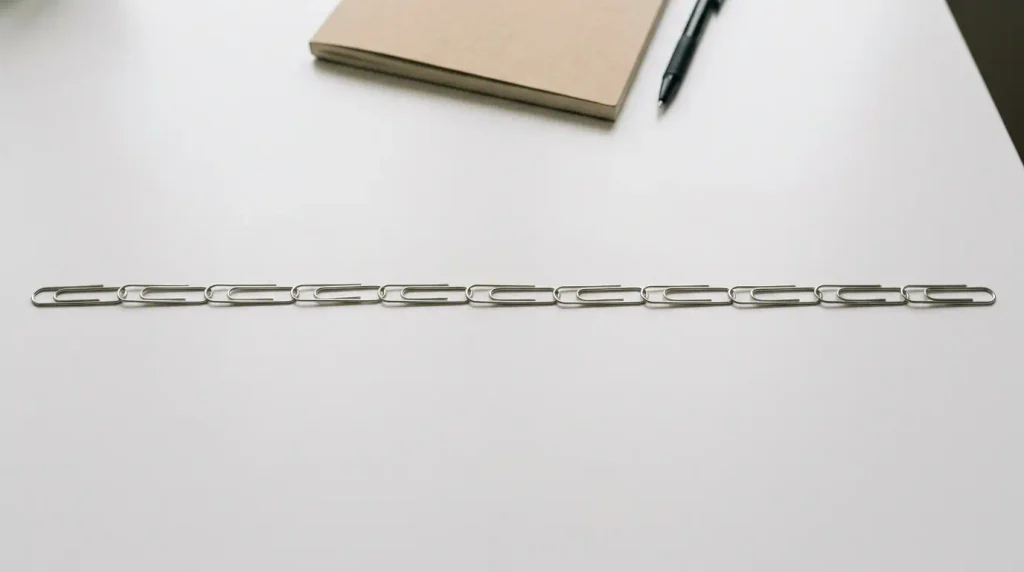
Most people overlook stationery sitting in their desk drawer, yet it holds surprisingly accurate reference potential. Line up 15 paper clips end-to-end across a flat surface and you land almost exactly on target — each standard clip measures one inch, making the line up a reliable ruler substitute for students working on projects without measuring tools.
This trick works in any household setting without preparation. The practical appeal is immediate ordinary items already within reach become a quick measuring system requiring zero tools.
14. Two Wooden Pencils
Place two wooden pencils side by side, tip to tip, and the combined span lands at exactly 15 inches since each standard pencil with eraser runs 7.5 inches from end to end. It is one of the most quietly simple yet reliable ways to visualize a specific length without hunting for a tape measure.
The standard design of a pencil has remained remarkably consistent across decades, which is precisely what makes it dependable as an informal ruler.
15. Standard Soda Cans

Stack three soda cans upright in your refrigerator and you have an unexpectedly accurate spatial reference for this span. Each can stands 4.83 inches tall, so three stacked cleanly hit the 15-inch length mark with minimal deviation.
Beyond measuring, this insight reframes how people think about shelf space and storage when organizing a refrigerator or pantry. Understanding how cans occupy vertical space helps with estimating dimensions for cabinet purchases and setup decisions
16. Five Hockey Pucks
Lay five pucks flat with edges touching and the combined edge-to-edge span reaches 15 inches since each hockey puck carries a standard 3-inch diameter governed by strict standardization rules across both professional sports and recreational sports leagues.
The rubber construction and consistent sizing mean this works as a dependable reference every time. Alternatively, stack 15 pucks vertically using their 1-inch thickness and the column reaches the same height. Even double stacking at 2 inches per pair with 10 pucks yields 30 inches exactly double.
Conclusion
Throughout this guide, every object explored from a laptop screen and bowling pin to a rolling pin and large pizza reveals how naturally this dimension appears in everyday life. A rectangular baking pan, large cutting board, and serving tray all confirm how deeply this span is embedded in household items we use without thinking.
The cast iron skillet, chef’s knife, and magnetic knife strip reinforce it further across cooking tools. Even paper clips, wooden pencils, soda cans, and hockey pucks carry this scale hiding in plain sight.
Once you visualize familiar objects this way, estimating any size during shopping, decorating, or planning spaces becomes genuinely effortless.
Faq’s
How Does 15 Inches Compare To One Foot?
One foot equals 12 inches, so this span runs 3 inches longer, roughly a quarter more length than a standard ruler.
How Do You Measure 15 Inches With No Ruler At All?
Lay two sharpened pencils tip to tip, stack three soda cans upright, or line up 15 paper clips end to end. A standard rolling pin, two wooden pencils, or laptop screen diagonal also works as a reliable quick reference using objects already within reach.
Is A Length Of 15 Inches Considered Long Or Short?
Neither it sits firmly in the medium size range. Compact enough to store easily, yet bigger than most handheld tools.
How Many Centimeters Does 15 Inches Add Up To?
Exactly 38.1 centimeters or 381 millimeters if you need finer precision.
How Many Feet Does 15 Inches Equal?
Fifteen inches works out to 1.25 feet, which can also be expressed as 1 foot 3 inches. Since a full foot contains 12 inches, the remaining three push it exactly one quarter beyond.
What Size Is A 15-Inch Pizza?
In most USA pizzerias, this diameter lands squarely in large pizza territory generous enough for a small group, yet one step below the extra large threshold.