When you begin to explore the dimensions of everyday items, you notice that many common things around you can help you understand length even without a ruler or measuring tool in your hand. In your daily lives, you may have encountered many situations where you need to estimate sizes of small items, and this is where familiar household objects, kitchen essentials, travel accessories, and simple household tools become a useful quick reference.
As you learn this easy technique, you start to picture objects that are five inches long, making it easier to estimate sizes during DIY projects, while shopping online, or in everyday tasks with ease, using the width of two standard dollar bills as a helpful alternative comparison for size.
How Long is 5 Inches?
Five inches is a short measurement that is commonly used to describe small lengths and sizes. In the metric system, 5 inches is equal to about 12.7 centimeters (cm) or 127 millimeters (mm).
When converted into larger measurement units, it is around 0.127 meters (m). In the imperial system, 5 inches is slightly less than half a foot, since one foot equals 12 inches. It is also a small part of a yard, because one yard contains 36 inches.
5 inches = 127 mm = 12.7 cm = 0.42 foot = 0.127 meters = 0.14 yards
Things That Are 5 Inches Long :
- Width of 2 US Dollar Bills
- A Butter Knife
- Five Paper Clips
- A Teaspoon
- 12oz Soda Can
- A Passport’s Height
- Popsicle Stick
- 2 Tennis Balls
- Playing Cards Width
- Two USB Flash Drives
- A Personal Nail File
- 5 US Quarters
HouseHold Items That Are 5 Inches Long :
- A Butter Knife
- Five Paper Clips
- A Teaspoon
- 12oz Soda Can
- Popsicle Stick
- Playing Cards Width
- A Personal Nail File
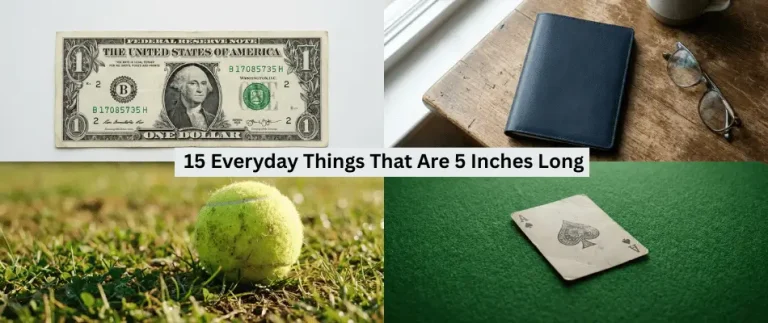
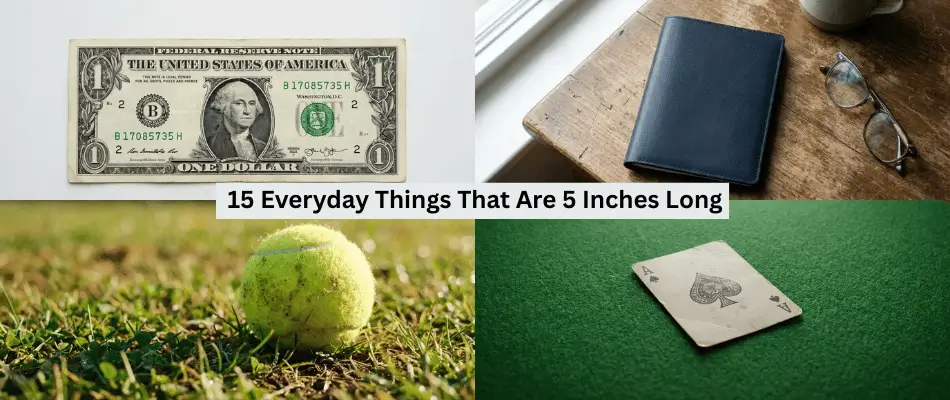
1. Width of 2 US Dollar Bills
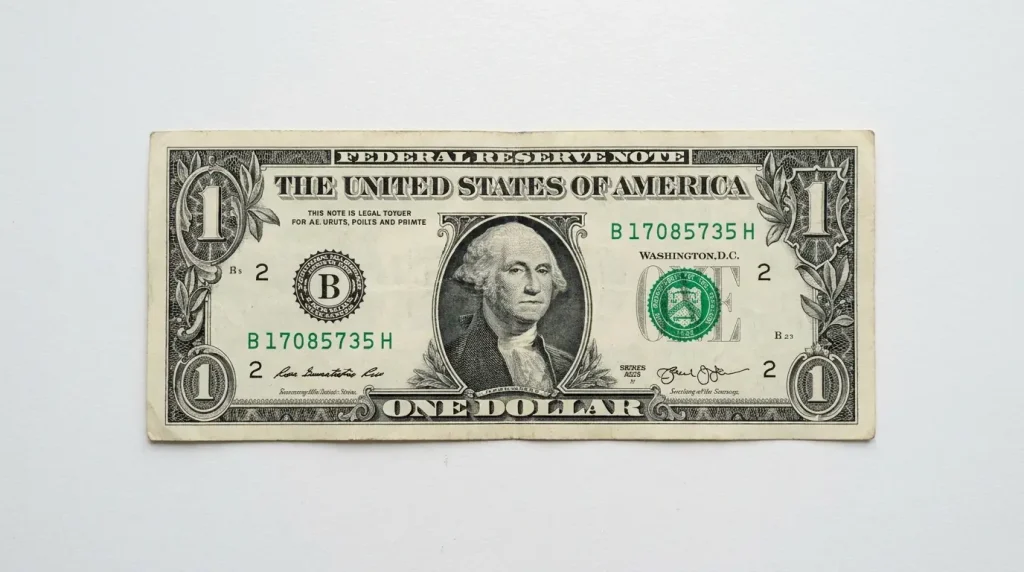
Here is a simple currency idea you can use when you want to picture something in the 5-inch length range. Every US dollar note follows a fixed standardized size, meaning all denominations share identical dimensions in inches.
In simple terms, a dollar note measures about 6.14 inches in length while its width is around 2.61 inches. One bill alone will not match the target, but you can combine two dollar notes by placing them side by side and aligning their width.
This layout often aligns closely with objects that are 5 inches wide. Because currency keeps the same dimensions, you can creatively use these everyday items to measure everyday objects in a quick and practical way when you need a targeted size reference.
2. A Butter Knife
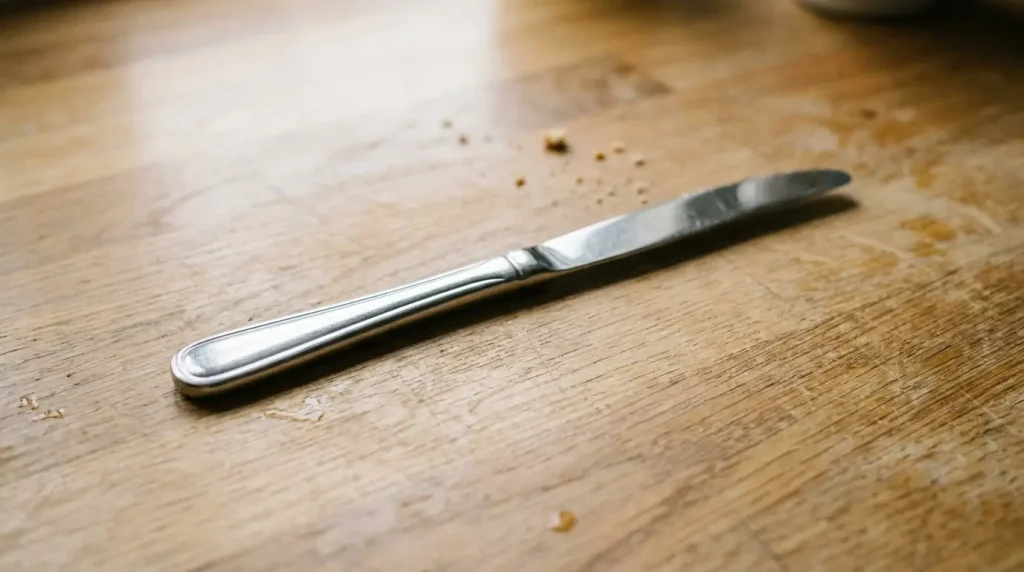
In your kitchen, a butter knife is a small but very useful kitchen tool. You probably use this kitchen utensil every day without thinking much about its length. Many butter knives fall within a size range of inches that makes them easy to handle, often between 5 inches and 7 inches.
Because of this practical size, it quietly becomes a helpful benchmark when you try to picture the dimension or dimensions of other items around you. Its intended purpose is simple. You use it for spreading and spreading butter taken from a butter dish. This essential tool handles butter smoothly while showing how useful a small everyday measurement can be.
3. Five Paper Clips
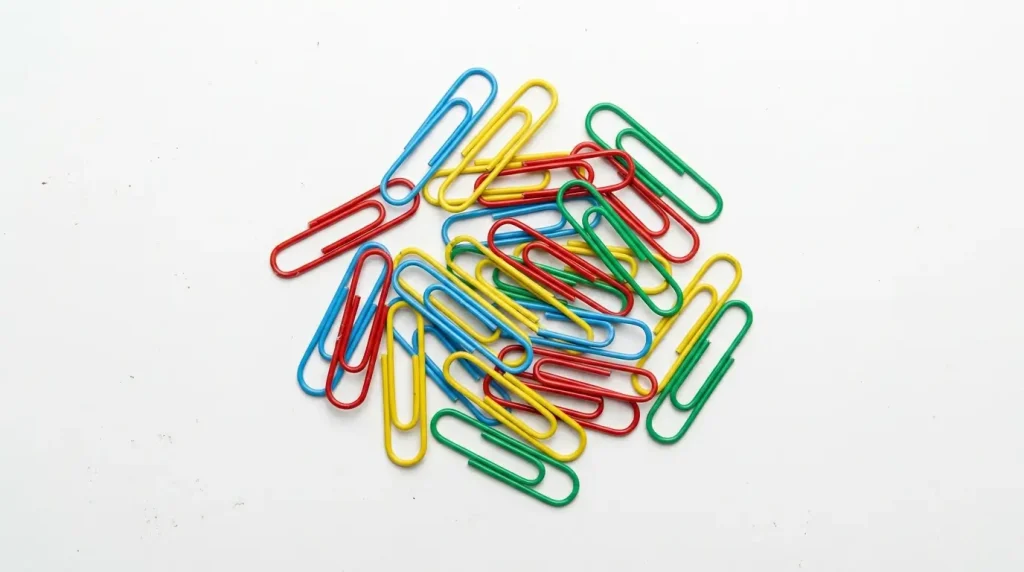
During your school life, you probably used paper clips, a piece of common stationery that many students keep in their household supplies. These small objects seem simple, but they can help you understand length in a practical way. If you take five paper clips and place them lined up end to end, you will notice that each clip is about one inch, and their combined length becomes close to five inches.
Because of this, these everyday paper clips can act as a quick measuring tool when checking objects that measure around 5 inches long. It is one of those clever tricks using everyday things that makes estimating size easier.
4. A Teaspoon
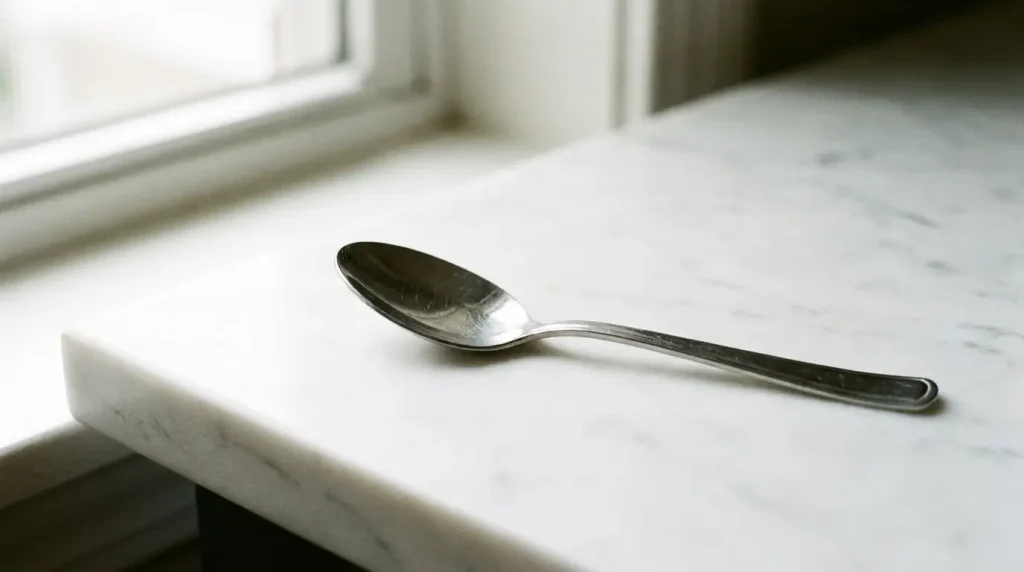
When you open your kitchen drawer, you often reach for a teaspoon, a familiar staple used in many culinary tasks like mixing drinks or adding ingredients. While arranging herbs in pots, you might try to estimate space in tight small spaces, and that is when a small realization happens.
The handle of the spoon sits very close to the 5 inches measurement mark when the ignored bowl is left out. The total length usually reaches 5.5 inches or even 6 inches because the bowl, also called the spoon head or head part, adds additional inches. If you disregard that portion, the handle works for measuring small distances, showing the dual utility of a teaspoon measured in inches.
5. 12oz Soda Can
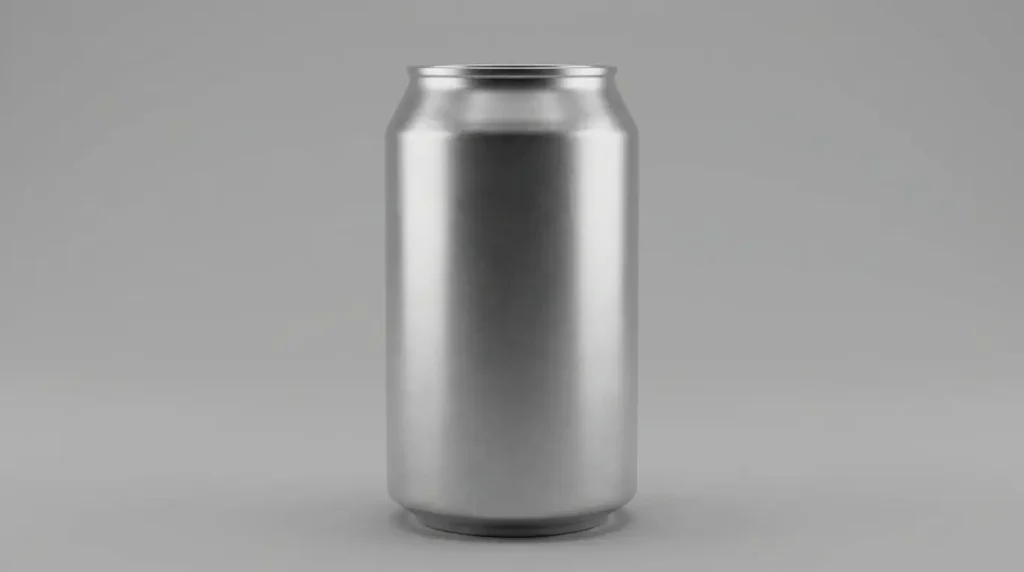
When you grab a standard soda can, you are holding a quick visual guide for size. A typical soda can with 12 fl oz is about 4.83 inches tall, or 4.83 inches in height, which is very close to five inches. The 0.17 inches gap is only a slight difference, so it still helps you picture a 5-inch product easily. This measurement works as a standard measurement across North America.
Made of aluminum, this everyday item appears in homes, offices, and restaurants. When you look at it standing upright in 3D, the size becomes an instantly recognizable example near the standard length and the familiar five-inch mark.
6. A Passport’s Height
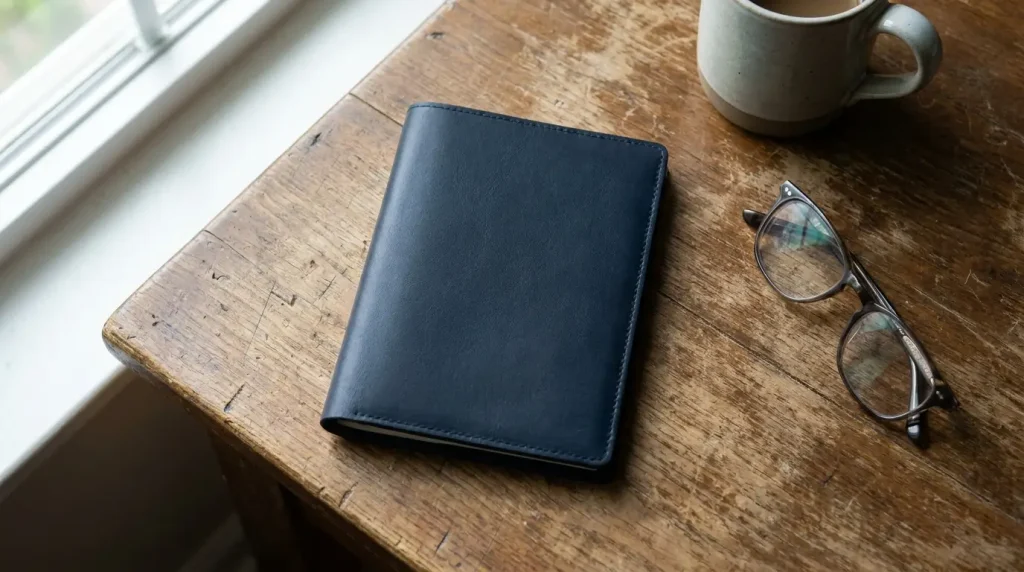
Holding a passport in your hand while traveling quickly shows how compact its design is. Many passports, including the U.S. version, use a travel-ready design that looks slightly tall yet easy to store. Global sizing rules like the ISO/IEC 7810 ID-3 standard define the booklet at 125 mm x 88 mm, which equals about 4.9 x 3.5 inches, making the passport roughly five inches long and 3.5 inches wide.
From my own trips, repeatedly handling this travel-ready booklet makes it a handy way to build a quick mental comparison for objects around five inches without measuring anything.
7. Popsicle Stick
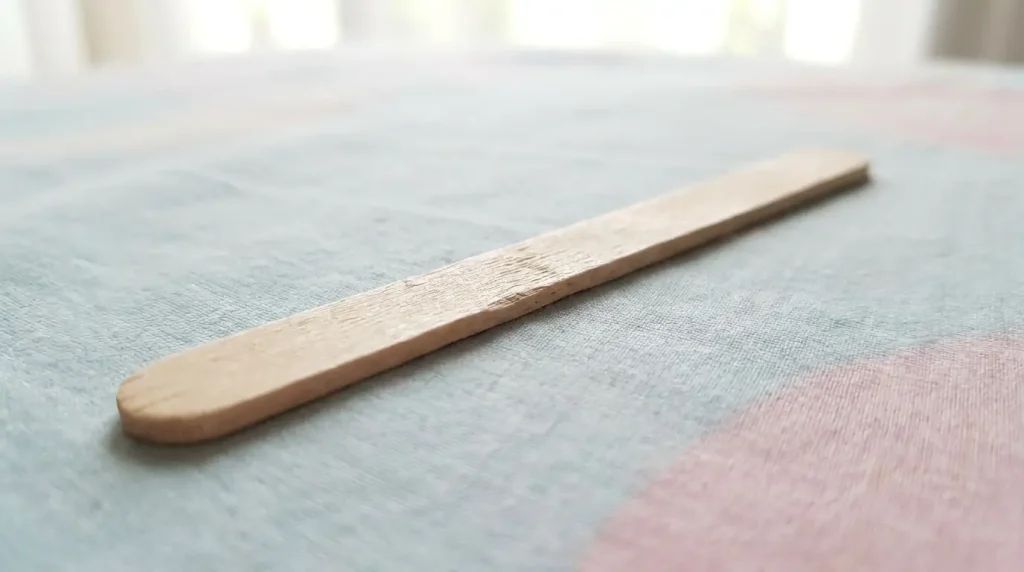
A popsicle stick is one of the easiest ways for you to picture a small length like five inches in real life. When you are holding one, you can clearly feel how thin these smooth wooden sticks are, and most brand designs keep them close to 4.5 inches to 5 inches long, making them an easily measurable size and a handy practical reference.
Many DIY enthusiasts also see it as a reliable craft supply because this classic craft material works perfectly for building crafts and simple crafts at home.
For you, it may even bring back memories of sticky fingers and sweet summer treats, since the leftover summer treat stick from a frozen snack often becomes the starting point for creative projects, which is one reason this simple item is still known as a childhood classic.
8. 2 Tennis Balls
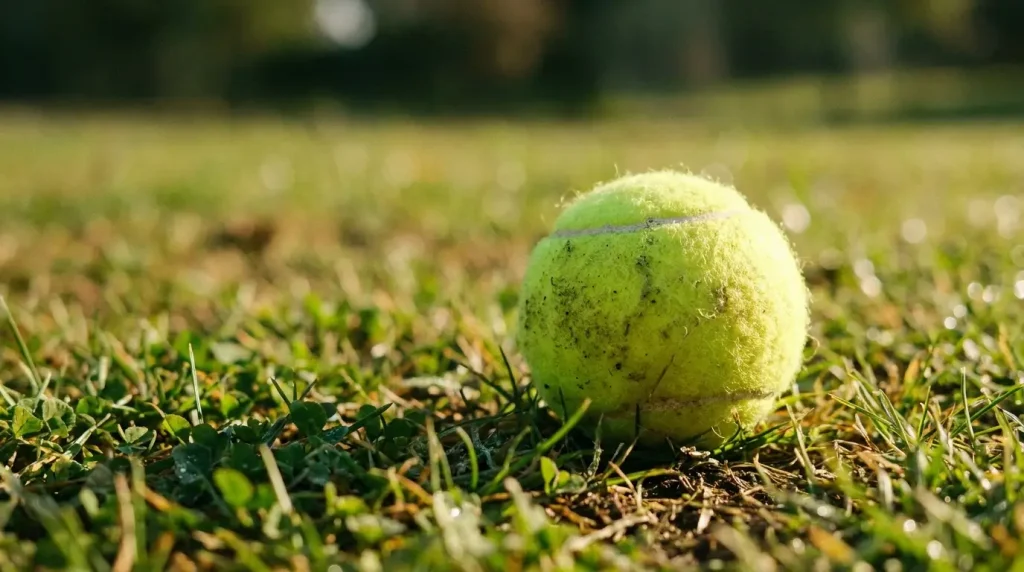
If you ever need a quick way to estimate length, two tennis balls can work as a simple measuring tool. In this well-known sport, a single ball usually has a size of about 2.6 inches to 2.7 inches, so placing two together means the length of two tennis balls creates a total length that is close to 5 inches.
This makes tennis balls a clever example for comparing everyday objects, showing how simple items can have practical uses in a quick size application when you do not have a ruler.
9. Playing Cards Width
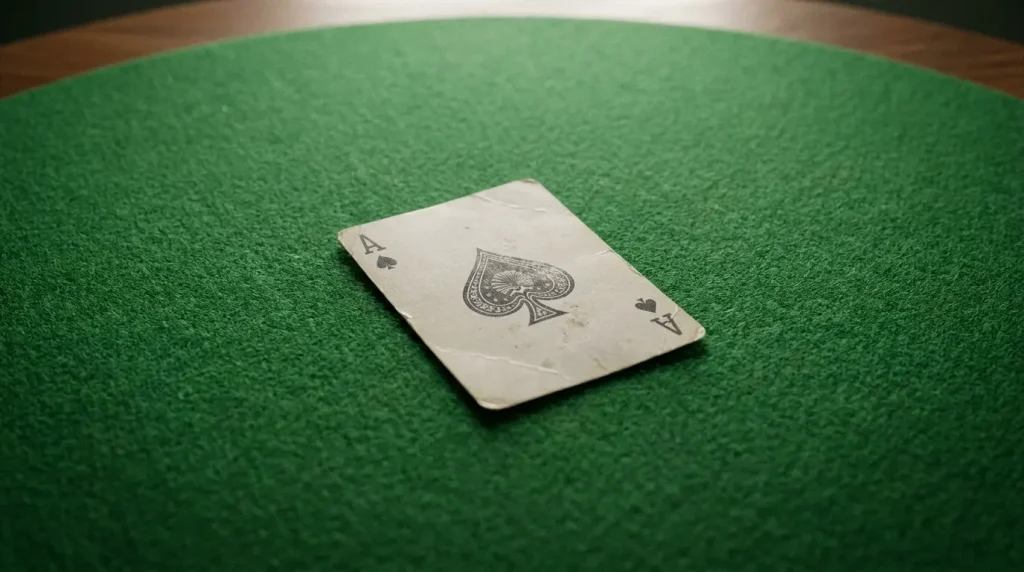
In everyday lives, you can rely on simple objects to estimate measurements even when a ruler is not available. Playing cards used in different games like rummy, bridge, or solitaire can work as a helpful reference. A standard playing card usually has a length of 3 inches and a width of 2.5 inches, which makes it a small but convenient guide for judging size.
If you align two standard playing cards together, the combined length reaches about 5 inches, giving you a quick visual way to consider the size of nearby objects. Although Index and Jumbo cards are larger, sometimes noted around 12 cm or even 25 cm, the regular card still offers a practical everyday comparison.
10. Two USB Flash Drives
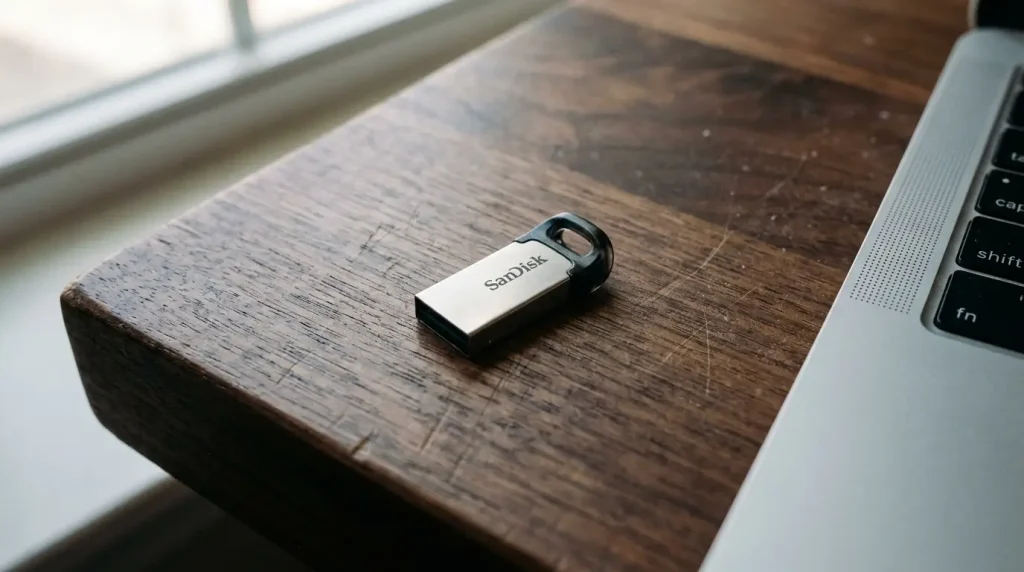
When you place two flash drive devices on your workspace, you start to understand length through objects you already use every day. A USB flash drive is often about 2.5 inches, which makes it easy to compare when thinking about five inches.
In daily data transfer tasks and while transferring data, you hold a small USB drive that has a compact shape, but some larger models with protective designs can stretch into longer drives that reach around 5 inches long. From my experience, noticing the sleek designs and solid casing of a flash storage device makes it a practical useful object to understand size while working at your desk.
11. A Personal Nail File
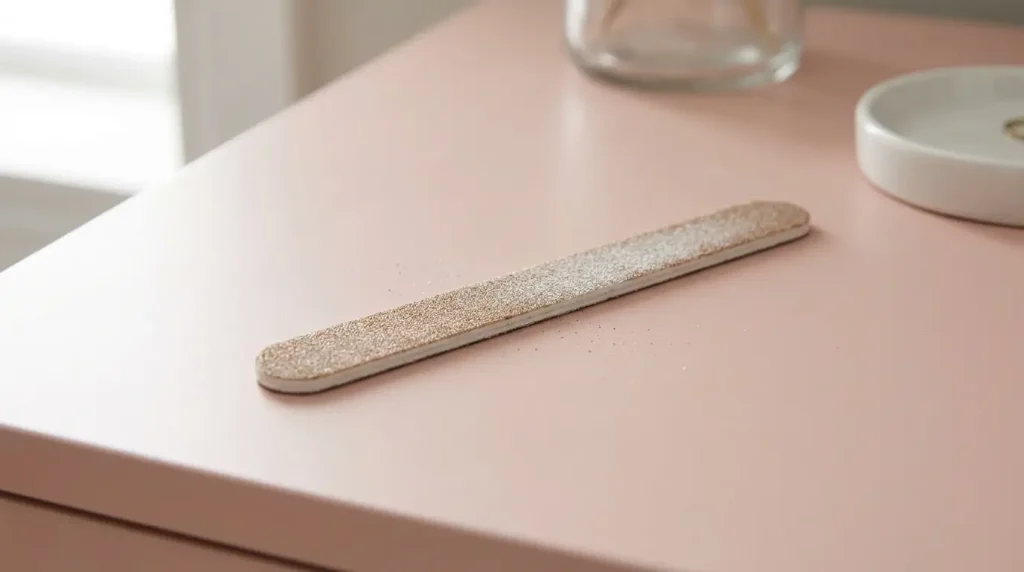
A personal nail file is a practical nail grooming and manicure tool used to keep fingernails neat, smooth, and properly shaped. Designed for everyday nail maintenance and personal care, it helps refine rough edges and prevent nails from snagging or splitting. A standard 5 inch nail file offers a comfortable grip while remaining compact enough for daily use.
Its compact structure allows it to fit conveniently inside a manicure case, beauty bag, or portable grooming kit for quick access whenever needed. Made from materials such as emery board, glass nail file, or metal nail file, this portable nail care accessory is ideal for quick touch-ups and maintaining a tidy, well-groomed appearance.
12. 5 US Quarters
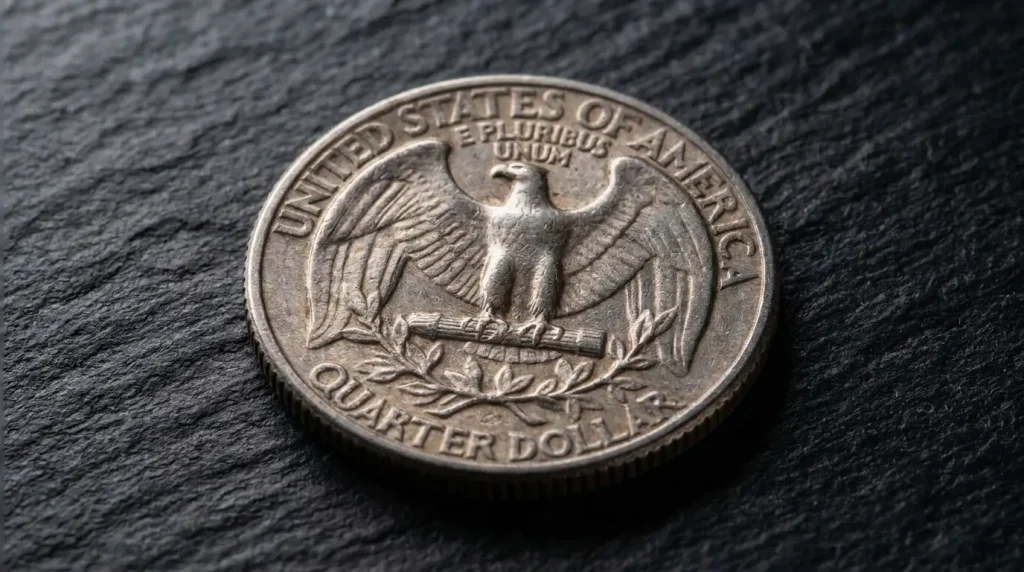
Five U.S. quarters, also known as United States 25-cent coins, measure close to 5 inches in length when placed side by side, making them a simple real-world reference for visualizing this measurement. A single U.S. quarter coin diameter is about 0.96 inches (24.26 mm), so lining up five quarters equals approximately 4.8 inches, which is very close to that length.
This makes quarters, coin diameter, and coin size comparison useful for estimating small measurements without a ruler. Because these everyday measurement references use familiar currency, they provide a practical way to understand length using a common household item.
Final Thoughts
Getting a clear idea of what a 5-inch length looks like is much simpler when you relate it to common items you see every day. Items such as the width of two US dollar bills, a butter knife, or five paper clips placed in a row provide a simple visual guide to this length. Other common examples include the height of a passport, two tennis balls side by side, or two USB flash drives, which are all close to the same measurement.
Even five US quarters lined up can help show what a five-inch length looks like. Using these everyday references makes it easier to picture small measurements, object size, and approximate dimensions without needing a ruler, helping people better understand this practical unit of length in daily life.