100-foot structures surround you in everyday life more than you realize. From the height of a 9–10 story building to the length of a blue whale, this substantial measurement of 30.48 meters appears across architecture, nature, construction, and transportation.
It equals one-third of a football field, and serves as a great reference point when judging the scale and vastness of towering trees, bridge sections, vehicles, and other fascinating creatures.
How Long Is 100 Feet?
Standing at the base of a 10-story building and looking up instantly builds spatial awareness that no numerical data can replace. At 30.48 meters or 33 yards, this significant length appears across everyday construction, urban planning, and sports.
Line up two standard semi-trailers end to end, or place three school buses together, and you have got 100 feet right there. At a normal walking pace, you cover this manageable distance in about 33 to 40 seconds, and that physical reality makes the measure truly noticeable.
Conversion: 100 ft = 1,200 inches = 3,048 cm = 30.48 meters = 33.33 yards
At a normal pace, how many seconds does it take to cross 100 feet?
At a normal pace of roughly 3 feet per second, covering 100 feet takes between 33 to 40 seconds depending on fitness level, age, and terrain. On a flat surface, whether indoor walking through a corridor or outdoor walking across a familiar measurement course, the walking distance feels genuinely manageable yet noticeably deliberate.
A brisk walk compresses that elapsed time toward the lower end, while a leisurely pace stretches it closer to 40 steps of forward movement. What makes this time-based measurement so useful is its practical reference value in everyday life, turning 30.48 meters of ground covered into a lived, physical experience that sharpens spatial awareness naturally.
Things That Are 100 Feet Long At a Glance
- 10 Story Building
- A Blue Whale
- Boeing 737-500
- 10 Basketball Hoops
- 18 Adults Laid Head to Toe
- Mature Coconut Palm Tree
- Twice The Height Hollywood Sign
- 5 Standard Shipping Containers
- 2/3 Olympic Pool Length
- Hoad Monument Height (Ulverston, UK)
- One Third Height of the Statue of Liberty
- One Third of a Football Field
- A Basketball Court
- Seven Average Cars (End to End)
1. 10 Story Building

If you stand near a downtown urban landscape, a modern commercial or residential building instantly gives you a perfect and highly relatable reference for understanding 100 feet. Each floor in a typical office or apartment construction sits at exactly 10 feet, carefully covering ceiling space, structural thickness, and utility lines running through every level.
As a city resident, connecting this numerical data to real physical height becomes far more observable and understandable once you start counting 10 stories rising vertically against the sky in any architectural context and design perspective.
2. A Blue Whale

The ocean is home to the most breathtaking giants our diverse Earth has ever seen, and the blue whale sits at the very top. As the biggest living creature and largest animal alive, a grown-up blue whale typically reaches around 90 feet in length, though the biggest recorded individual came close to 100 feet long, which completely changes your measurement concepts once you truly grasp it.
Studying replicas and full-size models gives you a starting point, but a real natural comparison in the wild hits differently. This magnificent marine animal lives a grand life in its natural environment, representing the most inspiring wildlife our Earth has to offer.
3. Boeing 737-500

You might not think about aircraft length during air travel, but standing beside a Boeing 737-500 changes that quickly. This modern commercial aircraft, introduced in the late 1980s, measures 101 feet, making it a near-perfect real-life picture of 100 feet long.
Built to replace outdated models like the 737-200, its aviation efficiency came from smarter fuel use and stronger performance. For anyone studying airplane length or scale in aviation, this jet delivers that reference naturally.
4. 10 Basketball Hoops
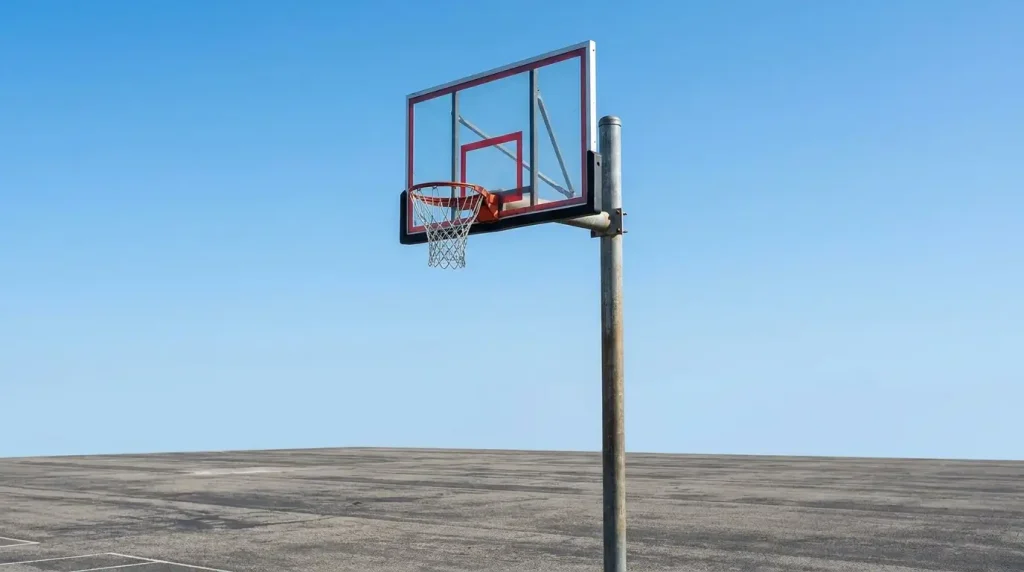
Few people realize that stacking ten standard basketball hoops one directly above the other creates a vertical column reaching exactly 100 feet. Each regulation hoop sits precisely 10 feet high, making this one of the most tangible and relatable everyday reference points for this distance.
The backboard adds roughly 3.5 feet tall of structure above the rim, but the core height measurement remains clean and consistent. Ground level to the topmost ring captures a familiar object that athletes interact with daily, turning an abstract spatial estimation into something genuinely observable and easy to visualize without any tools.
5. 18 Adults Laid Head-to-Toe

Eighteen people stretched out in a straight line, each measuring an average of 5.5 to 6 feet tall, collectively spanning almost exactly 100 feet. This human chain is among the most tangible ways to visualize this distance, requiring no tools whatsoever.
Anywhere from 16 to 18 people lying flat in a row produces a reliable physical estimation that makes the measurement deeply human-scale. What makes this method compelling is how it anchors an abstract number to body height, transforming a group measurement into lived experience.
Whether used for visual demonstrations or classroom exercises, this head-to-toe approach remains remarkably effective and instantly relatable to everyone.
6. Mature Coconut Palm Tree

You might not realize it, but a Cocos nucifera palm quietly dominates tropical coastlines across the Pacific, Caribbean, and Indian Ocean regions by simply growing tall over decades. It stretches its slender trunk upward, adding just a few feet each year under ideal conditions until it pushes past 100 feet into open skies.
That narrow column topped with swaying fronds looks fragile but is actually built to flex against heavy winds without snapping. Standing as one of nature’s most recognizable markers, a fully grown coconut palm tree is a true display of natural height.
7. Twice The Height Hollywood Sign

Perched dramatically on Mount Lee within the Hollywood Hills, overlooking the Santa Monica Mountains, the Hollywood Sign stands as both a cultural icon and a surprisingly practical measurement reference. Each individual letter rises approximately 49 feet tall, meaning that two letters placed side by side approach nearly 100 feet wide.
This practical estimation works because the sign occupies a landscape instantly familiar to people worldwide. Standing before these enormous white structures, one genuinely grasps the grand scale of what 100 feet looks like in a real visual reference environment.
The sign’s total width extends considerably further, reinforcing how impressively large this iconic landmark actually is when experienced in person.
8. 5 Standard Shipping Containers

Standard shipping containers represent one of the most precise and industrial reference points for 100 feet. A typical intermodal container measures exactly 20 feet long, meaning five units arranged end to end produce a clean, unambiguous 100-foot length.
These containers are engineered to strict global tolerances, making them exceptionally reliable for large-scale measurement comparisons. Found at ports, rail yards, and construction sites worldwide, they offer a structural benchmark that professionals across logistics, architecture, and urban planning instinctively understand.
9. 2/3 Olympic Pool Length

An Olympic swimming pool stretches 50 meters in total length, which converts to approximately 164 feet. Two-thirds of that span equals roughly 33 meters, landing almost exactly at the 100-foot mark. This aquatic reference resonates strongly with competitive swimmers who train in precisely dimensioned athletic facilities daily.
The pool’s regulated 25 meters width and 2 meters depth are fixed globally, reinforcing how precise dimensions define performance environments. Lap swimming in a standard recreational pool of around 30 meters approximates this same measurement closely.
Whether picturing that crisp horizontal measurement during a race or simply pacing the pool deck, the 60% of an Olympic pool mental image makes 100 feet immediately accessible and easy to grasp for anyone familiar with water sports.
10. Hoad Monument Height (Ulverston, UK)

You would not expect a quiet town like Ulverston to hold such a striking landmark, yet this 100 feet tall stone tower proves otherwise. Erected in the 1850s, it takes the form of the famous Eddystone Lighthouse and honors a celebrated local historical figure tied deeply to the area. What makes it so intriguing is that its exact height was carefully planned rather than chosen by chance.
The Victorian engineers behind it designed every inch so the monument would stay visible across the surrounding hills and valleys. As a visitor, you can climb the interior staircase and reward yourself with panoramic views stretching across the Lake District. Frozen in stone, this monument quietly teaches you what 100 feet really feels like when it rises right before your eyes.
11. One-Third Height of the Statue of Liberty

The Statue of Liberty rises approximately 305 feet from ground to torch, making one-third of her total height land squarely around 100 feet, which corresponds roughly to the pedestal base level. This comparison transforms an iconic landmark into a living measurement reference that millions of visitors intuitively understand.
Standing at Liberty Island and gazing upward, that first third of the structure already represents a substantial measurement equivalent to a 10-story building.
The vertical scale conveyed here is remarkable: what feels like an approachable distance from afar reveals itself as a genuinely impressive height once experienced at ground level, making this one of the most architecturally compelling references for 100 feet available anywhere.
12. One-Third of a Football Field
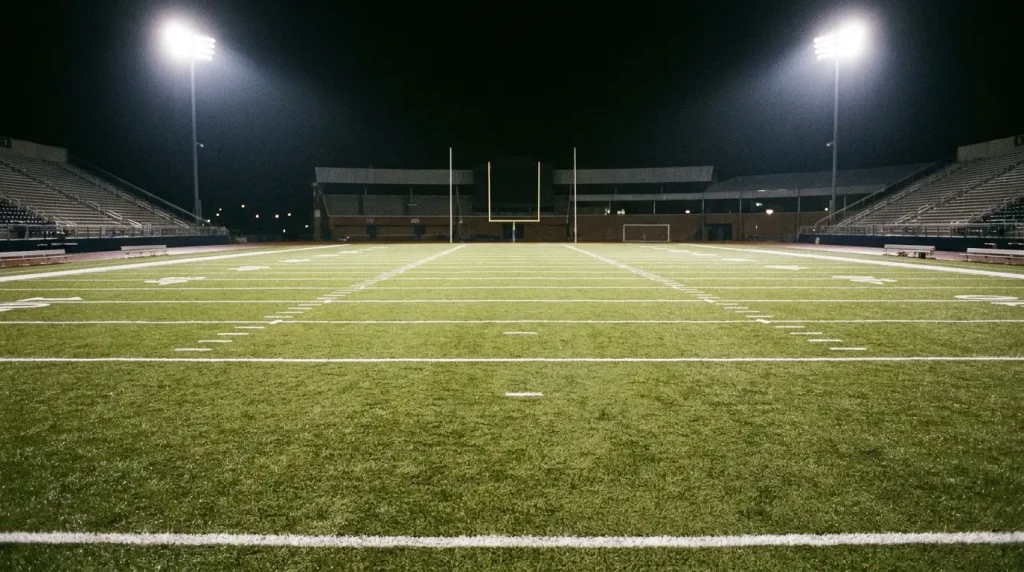
Most athletics fans never consciously register that walking from the goal line to the 33-yard line covers exactly 100 feet, yet football players and coaches internalize this measurement instinctively through repetition. The full 360 feet spanning end zone to end zone means that 27.8% of the field’s length equals this distance precisely.
A casual stroll across just one-third of the American football field traverses the same total span as a 10-story building standing upright. Field dimensions carry real practical perspective for anyone who has ever stood at center field and gauged the play area ahead. The magnitude of 300 feet becomes far more traversed and tangible once broken into this familiar sports reference.
13. A Basketball Court
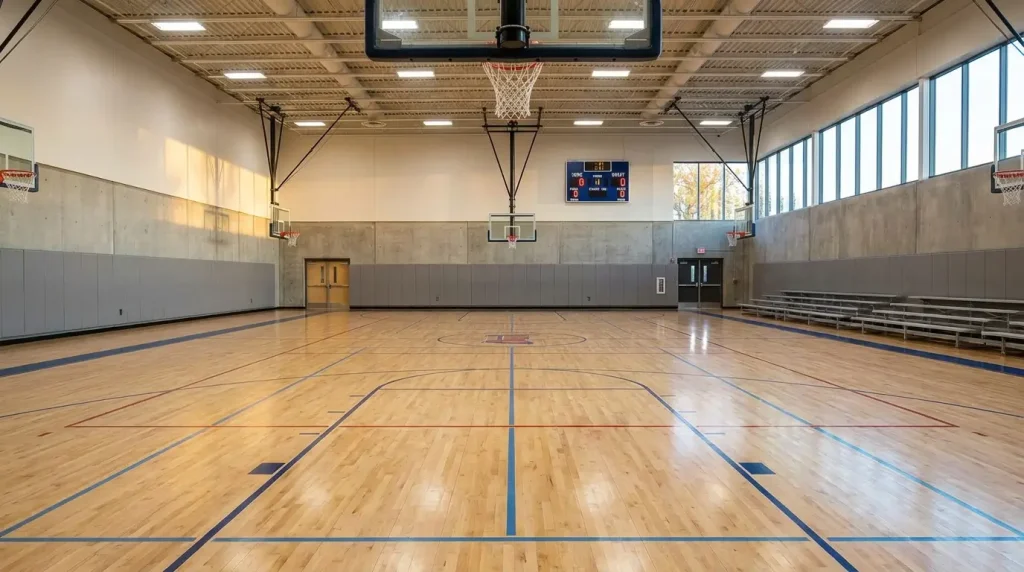
A standard basketball court measures 94 feet in length, falling only 6 feet short of 100 feet, which makes it a close and practical reference for that distance. If you have ever stood at the baseline staring toward the opposite baseline inside a professional arena or school facility, that span feels massive in person.
The NBA sets these court dimensions as a standard across arenas, gyms, and schools globally, so wherever you step onto that playing surface, those boundary lines and competitive energy feel familiar after just a few practice hours.
14. Seven Average Cars (End-to-End)
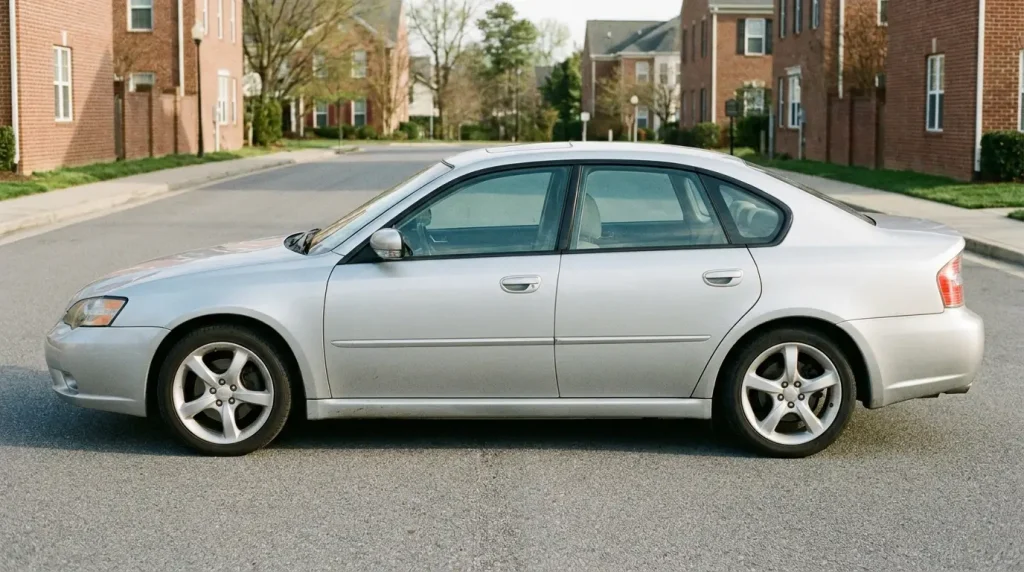
Standard sedans typically measure between 14 to 16 feet long, which means placing six to seven cars bumper-to-bumper in a straight line produces a remarkably accurate 100-foot span. This parking lot visualization works particularly well for horizontal estimation because drivers encounter parked cars constantly across lots and streets without ever consciously registering their cumulative distance. What surprises most people is how naturally seven vehicles fill that space.
Compact cars at 12 to 14 feet push the count toward eight, while mid-size sedans keep it closer to six. Either way, the next time you walk past a row of bumper-to-bumper traffic, you are likely strolling alongside a near-perfect 100-foot reference without realizing it.
Conclusion
Reframing how we perceive 100 feet changes everything about how we navigate urban environments and natural environments alike. The magnitude of this measurement stops feeling abstract the moment it connects to building heights, athletic distances, or property dimensions you already know.
Whether it is seven cars end-to-end, 18 adults stretched head-to-toe, or the towering Eastern Cottonwood Tree reaching skyward, each reference sharpens spatial awareness in ways that serve safety clearances, construction planning, and everyday life decisions.
From 10 kayaks aligned on open water to the blue whale heart scaled twenty times over, from a 1 and 1/3 bowling lane to a crisp Olympic swimming pool corridor, one hundred feet surrounds us constantly in the tangible world, waiting to be recognized through familiar references hiding in plain sight.
How Many Car Lengths Is 100 Feet?
Drivers instinctively underestimate how quickly car lengths accumulate. A mid-size sedan running 15 to 16 feet means just 6 to 7 cars end-to-end closes the full 100 feet gap, while compact cars at 12 to 14 feet push that count closer to eight.
The key variable is vehicle size, which shifts the estimation by a full car in either direction. This method works best in parking lots where identical models sit bumper to bumper, giving a clean uninterrupted distance read that most people find far more intuitive than any tape measure.
How Much Is 100 Feet Visually?
Visually anchoring 100 feet requires ditching ruler thinking entirely. The ten-story building height works because every floor communicates a clear vertical unit the eye already trusts. Alternatively, scan a parking lot for seven cars sitting end-to-end and the horizontal span becomes equally convincing.
Neither mature oak trees brushing that ceiling nor a bowling alley stretching through its full approach areas feel particularly dramatic until you realize both quietly hit this same spatial awareness threshold. These familiar references do not just describe 100 feet, they rewire how confidently you read length and distance in any environment going forward.
How To Measure 100 Feet?
Precision and practicality pull in opposite directions here. A 100-foot tape measure delivers exact results but demands two people and clear terrain. Laser distance finders solve that instantly, making them the preferred choice in surveying equipment settings where accuracy cannot be compromised.
For informal estimation, the body itself becomes a reliable tool: 33 to 40 steps at a normal stride consistently covers this ground on a flat surface. Counting ten 10-foot increments using a standard builder’s tape also works cleanly.
How Many Stories High Is 100 Feet?
The answer shifts depending on building type, which most people overlook entirely. Commercial buildings engineering each floor at exactly 10 feet per floor including floor thickness and mechanical space land cleanly at 10 stories for 100 feet. Switch to residential buildings where 9-foot ceilings are standard and that same building height accommodates roughly 11 stories instead.
How Large Is 100 Feet in Inches?
The conversion itself is straightforward: 100 feet equals exactly 1,200 inches, but what makes this unit conversion practically valuable is scale comprehension. When length expressed in feet feels too broad for detailed work, shifting to inches sharpens resolution immediately.
How Many Meters Is One Hundred Feet?
100 feet translates to exactly 30.48 meters, a conversion that sits at the intersection of two measurement traditions that still coexist across global industries. The metric system did not make this feet to meters relationship arbitrary: it is a precise, fixed unit conversion that engineers, architects, and athletes reference constantly when measurement standards shift between imperial and metric documentation.
Knowing this figure cold removes friction from international project coordination where a single misread length figure can cascade into costly errors.
How far is 100 feet when converted into kilometers?
Framed in kilometers, 100 feet becomes 0.03048 kilometers, which sounds almost negligible until context reframes it. The conversion factor of 0.0003048 kilometers per foot is what surveying and mapping professionals apply when reconciling field measurements across large scales where metric documentation is mandatory.
How much distance does 100 feet cover on a football field?
Most people standing at one end zone assume 100 feet disappears quickly into the field. It does not. That distance carries you only 27.8% of the way across the full 360 feet between end zones, stopping well short of even the one-third marker at the 33-yard line.