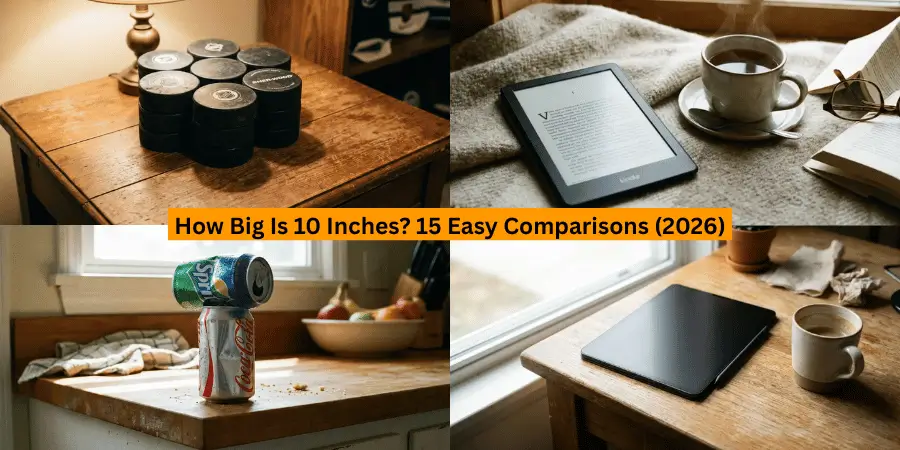
Most people never stop to question what ten inches actually feels like until they need to measure something without a ruler. This length sits quietly in everyday life, showing up in your kitchen, your wallet, and even your own hand.
At 25.4 centimeters or 0.833 feet, it occupies a sweet spot between too small to matter and large enough to be genuinely useful. The metric system defines it as 254 millimeters, but no number truly clicks until you hold a reference object. Understanding this measurement changes how you visualize the size of things you already own.
HOW BIG IS 10 INCHES?
You probably come across the length of ten inches in everyday situations more often than you realize. At 25.4 centimeters or 0.83 feet, this measurement occupies a very familiar size range without announcing itself. Picture a standard ruler and locate the 10-inch mark at 83.3% of its total length.
Alternatively, a US Letter paper at 11 inches tall needs just one inch mentally removed to arrive at a perfect visual guide. For those who prefer body-based references, an adult hand span stretched from thumb to pinky often lands between 9 and 10 inches. This measurement is genuinely everywhere, hiding in plain sight across kitchens, offices, and pockets worldwide.
10 inches = 25.40 cm = 254.0 mm = 0.254 meters = 0.8333 feet = 0.2778 yards
No Ruler? Here Are 15 Things That Are 10 Inches Long
- 10 x Standard Paper Clips
- 10 x Hockey Pucks
- Five AA Batteries
- Five Regular Matchsticks
- Three Credit Cards
- iPad 10th Generation
- Standard Dinner Plate
- Large Chef’s Knife
- Two Soda Cans
- Ten US Quarters
- Adult Hand Span
- A4 / Letter Paper
- Standard Ruler
- Smart Phones
- Large Kindle
1. 10 x Standard Paper Clips
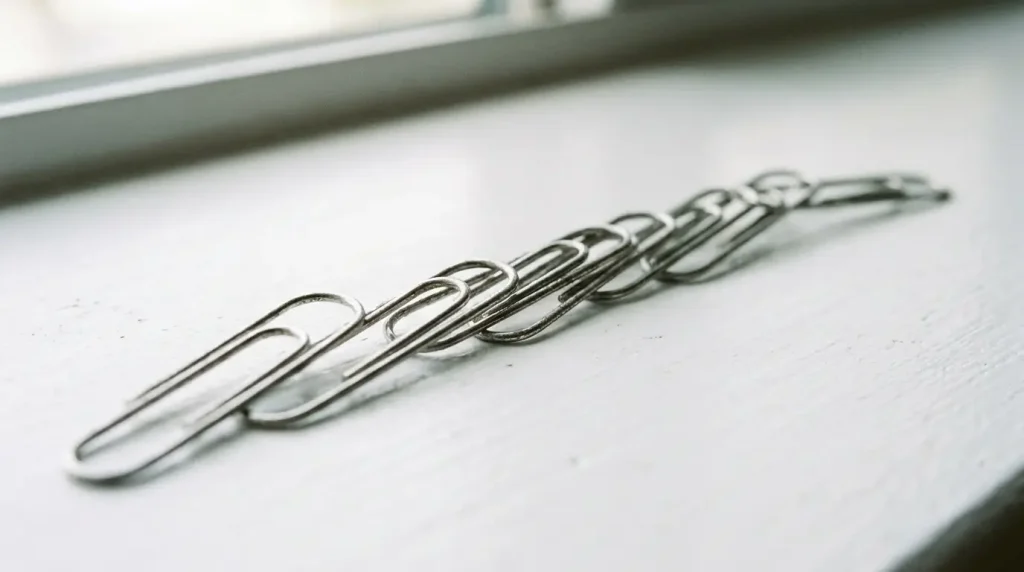
The humble paper clip rarely gets credit as a measuring tool, yet ten of them lined up end to end deliver a surprisingly accurate result. Each standard clip measures exactly 1 inch, making this one of the most precise methods available without any equipment.
No matter if you’re in a classroom, at your workplace, or tackling a home improvement task, you can use this quick method right away. The lining up process requires no skill, just a flat surface and patience. Few people realize that something sitting in their desk drawer can double as a reliable reference for 10 inches on demand.
2. 10 x Hockey Pucks
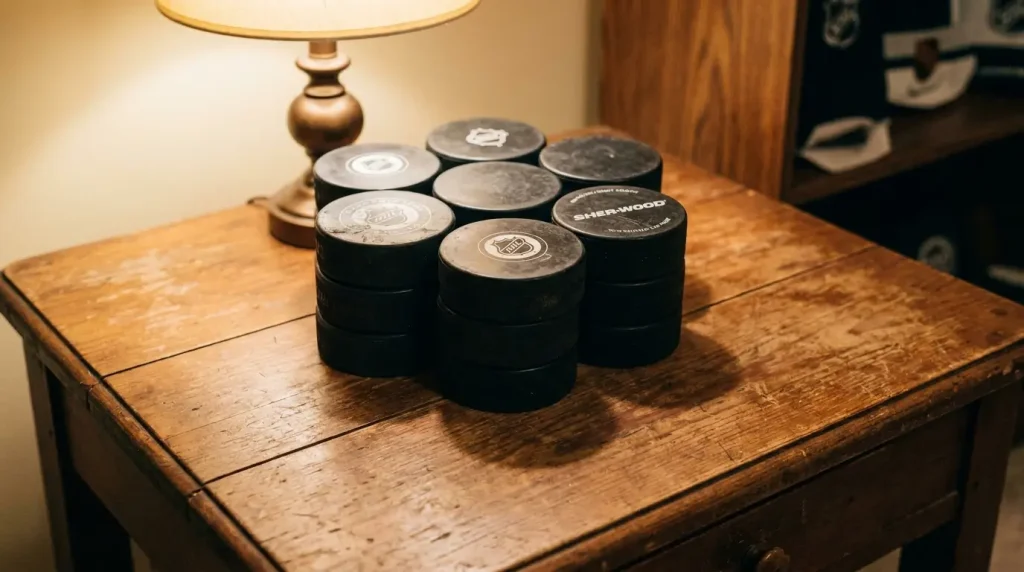
Not everyone keeps hockey pucks nearby, but those who follow the sport already own an incredibly accurate physical measuring tool. Each puck is exactly 1 inch thick, meaning a stack of ten creates a perfectly tangible 10 inches of height.
What makes this method genuinely interesting is how it turns a sports item into a spatial learning tool. The thickness never varies because manufacturing standards keep every puck identical. Building the stack also gives you a hands-on feel for how inches accumulate in real life. For visual learners, this approach makes abstract measurement feel remarkably concrete and intuitive.
3. Five AA Batteries
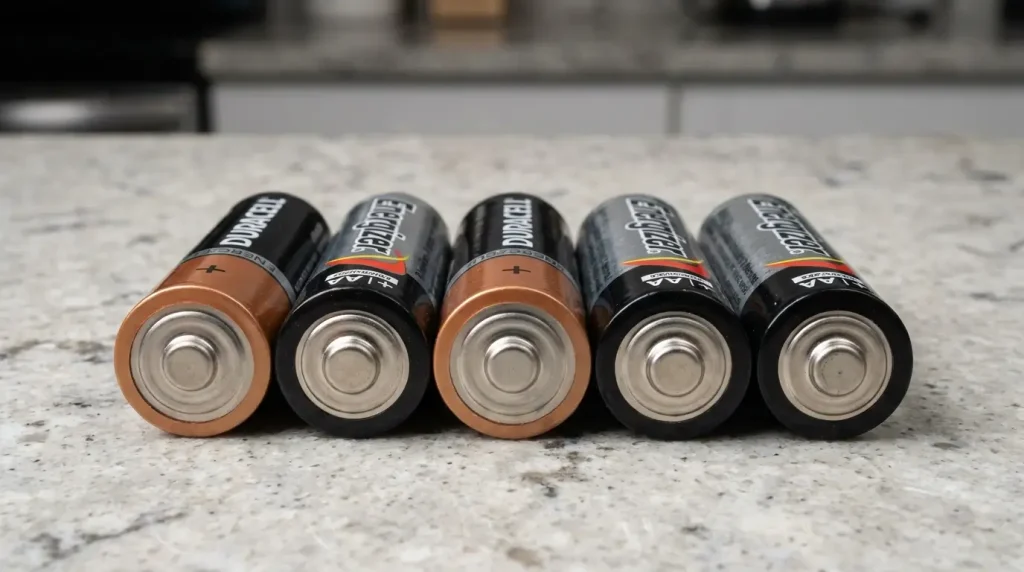
Place five AA batteries flat on a surface, touching end-to-end without gaps, and you have one of the most reliable improvised measuring references available. Each battery measures exactly two inches in length, so the combined span hits 10 inches with no margin for error. Their cylindrical shape keeps them naturally aligned on flat surfaces, which actually improves precision compared to irregular objects.
This works equally well for DIY projects, quick estimates, or any situation requiring approximate measurements. Because consistent manufacturing keeps every battery identical across brands, the result stays dependable whether you are a beginner or a seasoned professional.
4. Five Regular Matchsticks

Few household items are as dimensionally consistent as the ordinary matchstick. Each regular one measures exactly two inches, or roughly 5 cm, making five of them an unexpectedly accurate way to confirm 10 inches on any flat surface.
Laying them end to end in a straight row requires no special skill, yet the result is surprisingly dependable for everyday tasks like organizing a drawer or checking a quick measurement. The beauty here lies in their standard sizes across virtually every household brand. Without reaching for a tape measure, this simple row of five gives you an honest, handy physical reference you never expected.
5. Three Credit Cards
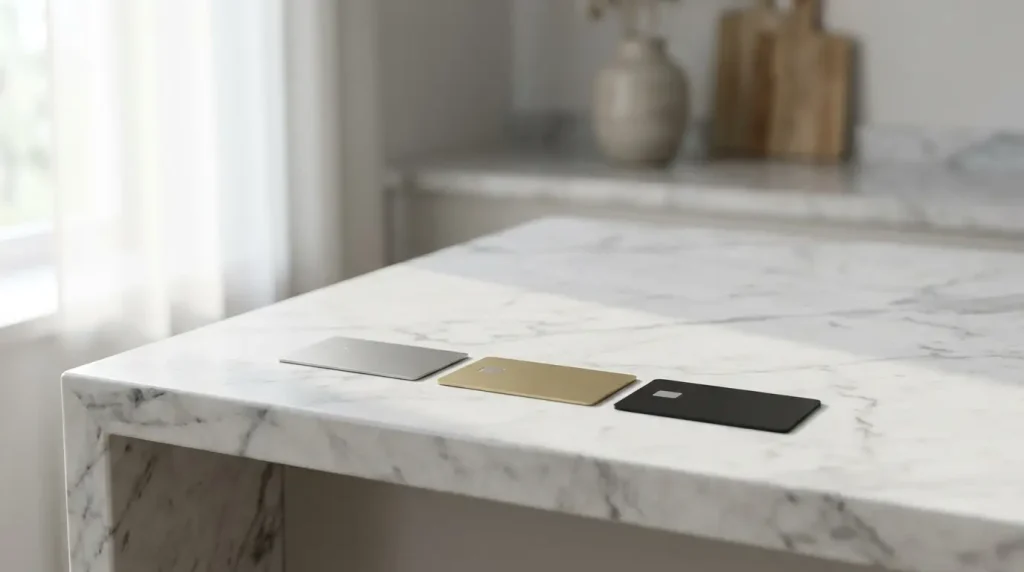
Your wallet already contains one of the most underrated measuring tools in existence. A typical credit card is about 3.37 inches wide, so placing three of them next to each other gives a total length of roughly 10.11 inches.
The difference is only about 0.11 inches, a tiny variation that has little to no impact in everyday use. Even as digital options like Google Pay and Apple Pay gain ground, physical cards remain universally carried. This method is precise, always within reach, and requires zero preparation. The next time you need a quick reference for 10 inches, skip the search and simply align what is already in your wallet.
6. iPad 10th Generation
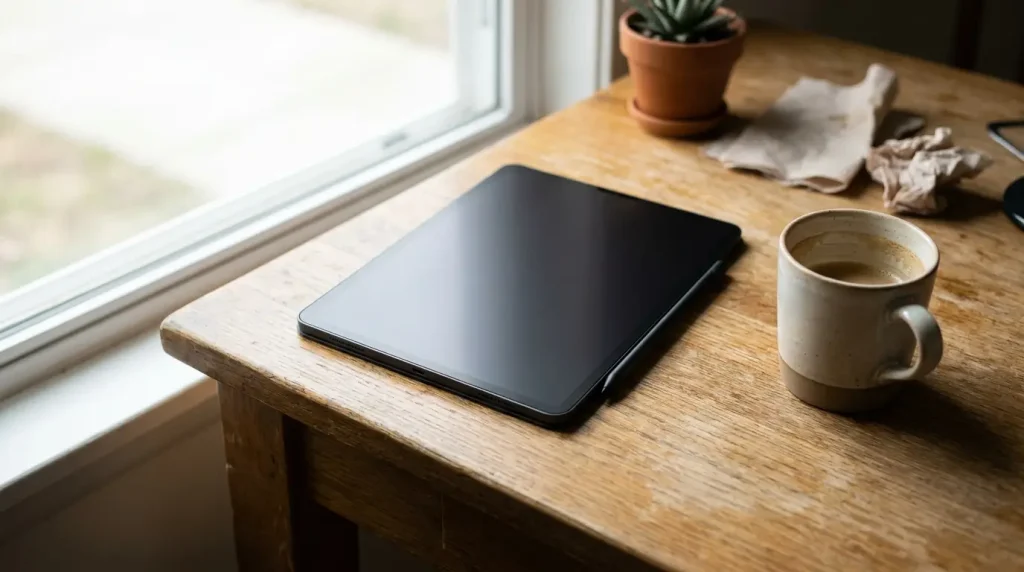
The iPad 10th Generation stands at 250.6 mm, which converts to approximately 9.87 inches in height. That puts it just 0.13 inches short of a perfect 10-inch benchmark, making it one of the most accurate technology-based references available.
Its 10.9-inch Liquid Retina display runs diagonally, but the physical height of the device itself is what matters here. With a width of 174.1 mm, equal to about 6.85 inches, the device is easy to hold and feels sleek rather than cumbersome. Millions of people carry this device daily without realizing they are holding a near-perfect measurement tool. For tech-savvy users, this is the most intuitive reference possible.
7. Standard Dinner Plate
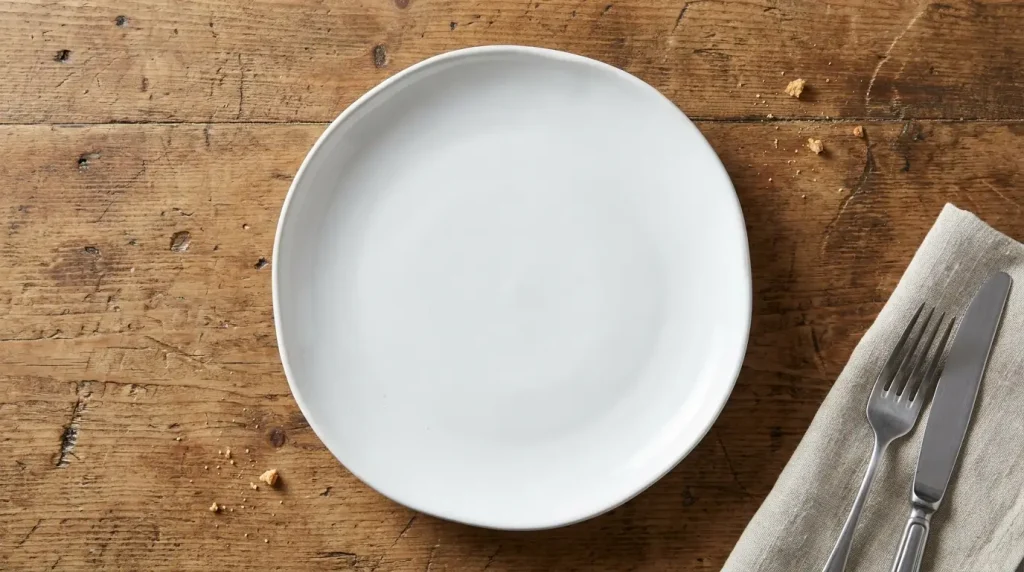
Walk into any restaurant and the plate in front of you is almost certainly between 10 and 10.5 inches in diameter. This sizing became the global standard decades ago because it balances portion control with comfortable table settings.
The circular form means you can measure across any direction and consistently hit that 10-inch mark. Restaurant-grade plates are manufactured to 10 inches exactly, while home kitchen versions stay within that narrow range. Beyond dining, this makes the dinner plate one of the most universally available reference objects on the planet. Nearly every kitchen holds one, making it an effortless benchmark for this measurement.
8. Large Chef’s Knife

Experienced chefs have long recognized that a 10-inch knife delivers the perfect mix of precision and cutting strength. Measured from tip to handle, this length accommodates everything from delicate herbs to large vegetables with equal efficiency. Culinary experts consistently choose this size precisely because the blade length provides enough leverage without becoming unwieldy in standard professional kitchens.
Brands like Wüsthof and Victorinox both manufacture well-regarded 10-inch models that have become benchmarks in the industry. For home cooks, holding one immediately communicates what 10 inches feels like in a genuinely practical, familiar context that translates directly to real measurement understanding.
9. Two Soda Cans

Stack two soda cans on your kitchen counter and you have created a physical column measuring approximately 9.66 inches, just 0.34 inches shy of a perfect 10. Each can carries a consistent height of 4.83 inches, a standard size maintained across cola, lemonade, and most beer formats worldwide. The visual is immediately recognizable because nearly every household stocks them.
This example works so well because it presents a real, tangible sense of depth rather than a flat representation. Unlike flat objects, two stacked cans give you a sense of length in real life that is easy to internalize. Using two cans together gives you a simple and familiar way to estimate 10 inches with items that are already available in many homes.
10. Ten US Quarters
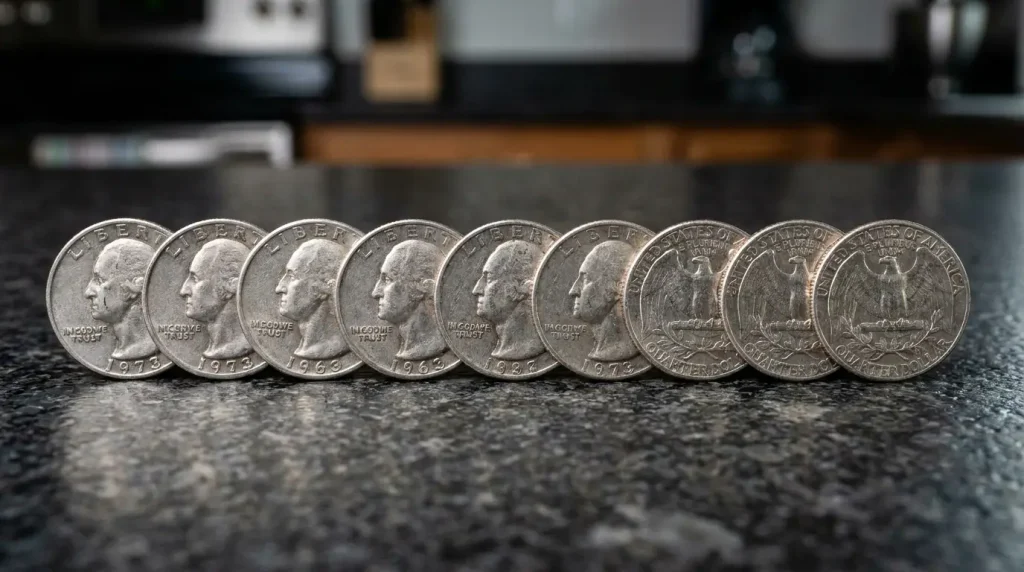
Arrange ten US quarters in a flat row and the combined diameter reaches approximately 9.55 inches, just under half an inch from the 10-inch mark. Each coin measures 0.955 inches across, with a thickness of only 1.75 mm. If you attempted a vertical stack instead, you would need roughly 145 coins to reach 254 mm in height.
Most people overlook coins as measurement tools, yet the quarter dollar is one of the most consistently manufactured objects in circulation. For quick estimating of small lengths, this method requires nothing beyond what most people carry in their pocket every day.
11. Adult Hand Span
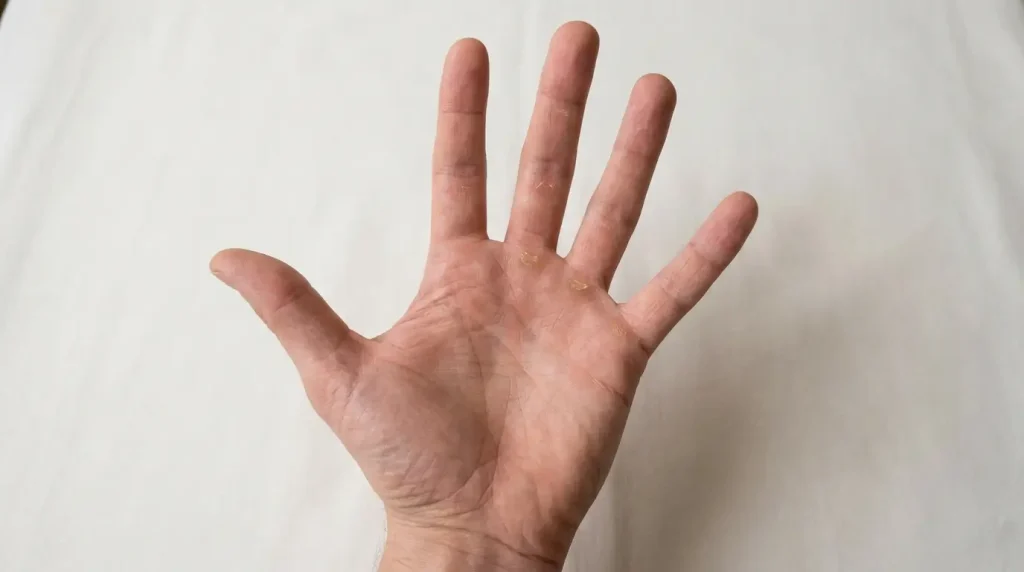
The human body carries its own built-in measuring device. Stretching your dominant hand from thumb to pinky typically spans between 9 and 10 inches for most men, while women generally measure between 7.5 and 9 inches.
Large-scale measurements collected by the CDC support these typical ranges, providing reliable evidence that this method is accurate. For a closer approximation, extending the index finger of your second hand adds roughly 3 inches to a 7-inch male palm, bridging the gap toward that 10-inch target. No tool, no preparation, no cost. Your hand span is the most portable reference you will ever use.
12. A4 / Letter Paper
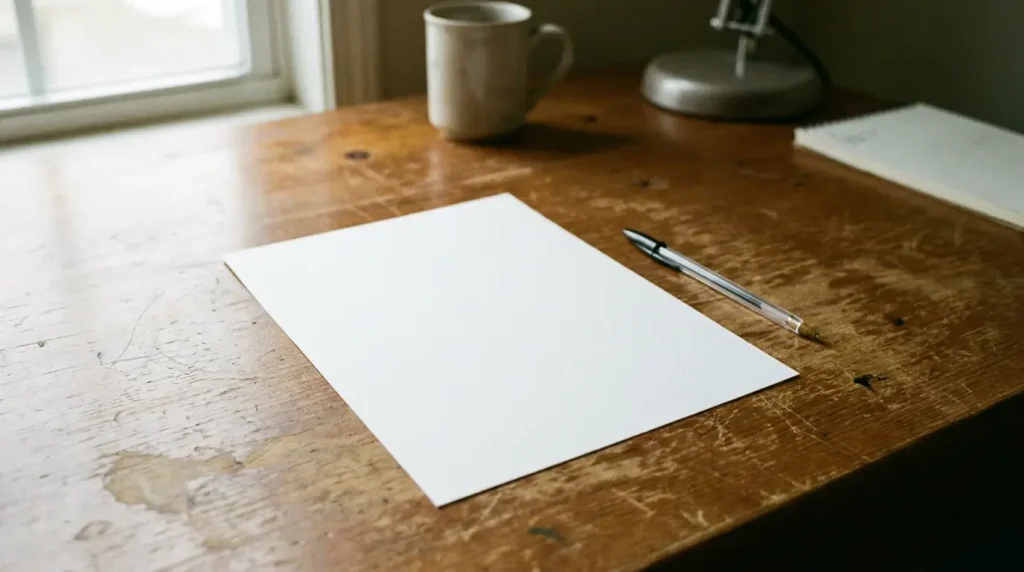
Offices and homes worldwide stock A4 paper without realizing it doubles as a dependable measurement aid. The sheet measures 11.7 inches in length and 8.3 inches in width, putting it just above the 10-inch threshold. A simple mental adjustment, imagining roughly one inch trimmed from the top, delivers an accurate visual guide instantly.
In the US, Letter size paper runs 11 inches tall and 8.5 inches wide, offering the same approximate reference. With 4 trillion sheets used annually in the US alone, this is statistically the most widely available measuring reference on the planet, already sitting on desks in virtually every workplace and home office.
13. Standard Ruler
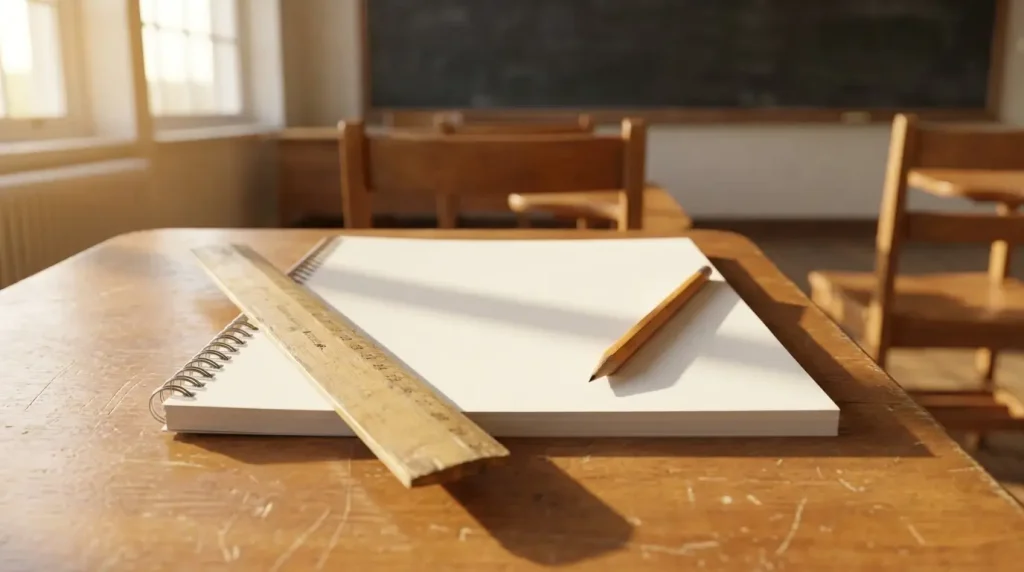
The 12-inch ruler is perhaps the most familiar measuring tool in existence, and the 10-inch mark on it tells its own quiet story. Sitting at exactly 83.3% of the total length, that mark is a daily reference for students, architects, drafters, and designers worldwide.
In both imperial and metric formats, the position remains consistent, making it a universal benchmark across all ruler types. Professionals in architecture and design rely on this specific point when sketching preliminary designs. The demarcation at that spot has simplified countless measurement tasks across educational settings and studios for generations, proving that the most effective tools are often the most straightforward.
14. Smart Phones
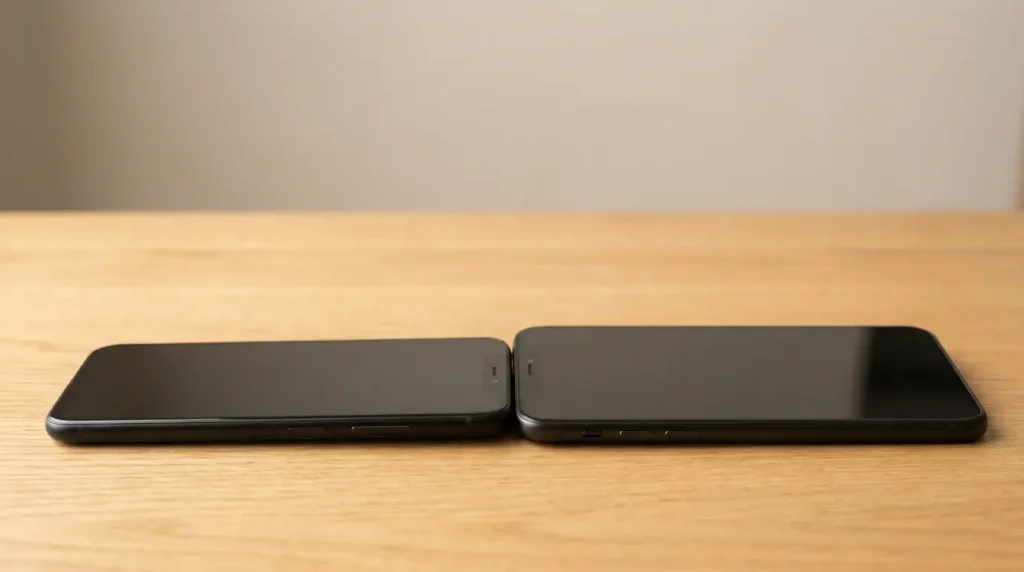
Modern smartphones offer more measurement utility than most users ever explore. The iPhone SE at 5.45 inches tall means two units placed end-to-end reach 10.9 inches, close enough for reliable reference. The iPhone 12 Mini and iPhone 13 Mini each measure 5.18 inches, so two together total 10.36 inches. Even the older iPhone 6, with its 2.64-inch width, gives a workable approximation when four are placed side by side.
Beyond Apple, the broader smartphone ecosystem of 5.8 to 6.2-inch devices offers similar flexibility. These pocket-sized tools, always within reach, quietly function as surprisingly dependable measurement references in daily life.
15. Large Kindle

The Amazon Kindle Paperwhite and comparable e-readers measure approximately 10 inches tall including the bezel, placing them among the most precise everyday reference objects in the tech category. Unlike tablets measured diagonally, the physical height of these devices aligns directly with the 10-inch benchmark.
Their lightweight build and consistent dimensions make them easy to pick up and compare against any object in question. As e-reader popularity continues growing, millions of households now own a built-in measuring reference without realizing it. For reading enthusiasts, this device already feels familiar in hand, making it an effortless and genuinely portable 10-inch benchmark.
Conclusion
Understanding 10 inches becomes effortless once you connect it to objects you already handle daily. From paper clips and matchsticks to dinner plates and chef’s knives, reliable references exist in every room. The metric equivalent of 25.4 centimeters or 254 millimeters may sound abstract, but holding two soda cans, spreading your hand span, or glancing at an A4 sheet makes it immediately tangible.
Whether you are shopping online, managing a DIY project, or simply satisfying curiosity, these everyday reference points transform a raw measurement into something you can confidently visualize, carry, and use without ever reaching for a ruler.
FAQs About Items Around 10 Inches
Q: Which Everyday Objects Actually Hit the 10-Inch Mark?
Most people never realize how many everyday items land right at this length until they start looking. Dinner plates are built around this size for a reason it fits a full meal without wasting table space. Chef’s knives in most kitchen drawers, tablet screens including the iPad, and even submarine sandwiches at popular chains all cluster around this measurement. Fully stretched adult hand spans come surprisingly close too. Once you start noticing these household reference points, 10 inches stops feeling abstract.
Q: What Familiar Object Can Help You Visualize 10 Inches?
The standard dinner plate is your best bet for a quick size comparison; its diameter sits right in this range. A sheet of letter-size paper at 11 inches gives you a close neighbor. A chef’s knife blade and a personal pizza size both live comfortably here too. These kitchen and household objects exist around 10 inches by design, not coincidence, making them the most reliable reference for this measurement.
Q: No Ruler Around? Here Is How to Gauge 10 Inches Anyway
Your hand span from thumb to pinky is the fastest body-based reference. Two dollar bills laid end-to-end get you remarkably close given each measures 1.6 inches wide. Credit cards placed lengthwise work as a backup check. For anything requiring real digital accuracy, a smartphone measuring app outperforms guesswork entirely. None of these replace a proper ruler but for a quick measurement of 10 inches on the spot, they are more than enough.
Q: What Should You Actually Know Before Ordering a 10-Inch Print?
The 8×10 print is the industry standard where 10 inches defines the longest side, typically used in portrait orientation for a family picture or wall display. Some manufacturers produce a 10×10 inches square format for a more balanced look. What catches most people off guard is matting it eats into the visible area, so the frame opening will be smaller than the actual print dimension. Whether you order 10×8 inches or a square format, always confirm the measurements refer to the print itself, not the frame.
Q: Why Does 10-Inch Mean Something Different Depending on the Product?
Context changes everything here. A 10-inch pizza is measured by diameter, a 10-inch tablet by screen diagonal, and a 10-inch knife strictly by blade length. The measurement is consistent but what it describes shifts completely by category. Treating size as a universal reference across product types leads to bad purchase decisions, so always confirm what dimension the 10-inch figure actually refers to before buying.
Q: Is a 10-Inch Pizza Worth Ordering or Is It Too Small?
It depends entirely on who is eating. A 10-inch pizza cuts into roughly 6 slices and feeds 1-2 people comfortably, sitting firmly in the small to medium range. Think of it as a refined personal pan pizza rather than a sharing option. Anyone expecting something closer to large pizzas at 14-16 inches in diameter will feel shortchanged. For a solo meal it is a solid size, but for groups it barely qualifies as a reference portion.
Q: How Would You Describe 10 Inches to Someone With No Measuring Tool?
Tell them to hold their arm out and measure from wrist to fingertips for most adults that span lands close to this length. A dinner plate, a tablet screen, or a large sandwich all approximate it well enough for daily life purposes. These everyday objects make 10 inches one of the easiest lengths to communicate in real life without any formal measurement reference needed.
Q: How Does Shoe Sizing Translate When Your Foot Is Around 10 Inches?
Shoe sizing is rarely straightforward across brands, which is why foot length in inches matters more than the label. A US men’s shoe size 10 corresponds to roughly 10.9 inches, while women’s size 10 sits at approximately 10.5 inches. Always measure both feet since they often differ slightly. Using actual inches as your anchor when buying shoes online eliminates the sizing guesswork that causes most returns.
Q: What Is the Simplest Way to Convert 10 Yards Into Inches?
One yard equals 36 inches, so the conversion for 10 yards is straightforward: just multiply and you land at 360 inches, which is also 30 feet. To better visualize this distance, imagine the length of two typical parking spots lined up one after the other. This kind of quick measurement math matters most in construction and landscaping where working in 10 yards but cutting in inches is a daily reality.
Q: What Does Anatomy Actually Say About the Ureter’s Length?
The ureter is a narrow tube running from the kidneys down to the bladder, and in most adults it measures between 10 inches and 12 inches in length. The female ureter tends to run slightly shorter than its male counterpart due to differences in pelvic anatomy and body structure. This is a well-documented fact in medical anatomy and a good reminder that 10 inches appears in places most people would never think to look.
Q: What shoe size corresponds to a foot length of 10 inches?
A 10-inch foot puts most women between women’s shoe size 7.5 and women’s shoe size 8, and most men around men’s size 6 to men’s size 6.5. For children, this length typically shows up around ages 6-8 depending on growth patterns. Always measure feet periodically since size shifts with age and activity. Getting the measurement right from the start saves a lot of discomfort later.
Q: What Does 0.1 of an Inch Actually Look Like Up Close?
A tenth of an inch at 0.1 inch is roughly 2.5 millimeters, which puts it well below what the naked eye can judge confidently without help. Stack a few credit cards together and their combined thickness gives you a feel for this small measurement. In everyday tasks it is easy to ignore, but in engineering or precision manufacturing, being accurate to this size demands proper precision tools rather than visual estimation.