Most people underestimate how often three feet shows up in daily life. It’s the height of a kitchen counter, the length of a baseball bat, and roughly the stature of a toddler taking on the world. This common unit bridges everyday objects and real human height in ways that make measurement feel less abstract and far more familiar.
Understanding this simple measurement helps with shopping, measuring spaces, and making confident decisions around household furniture and sports equipment every single day.
How long is 3 Feet?
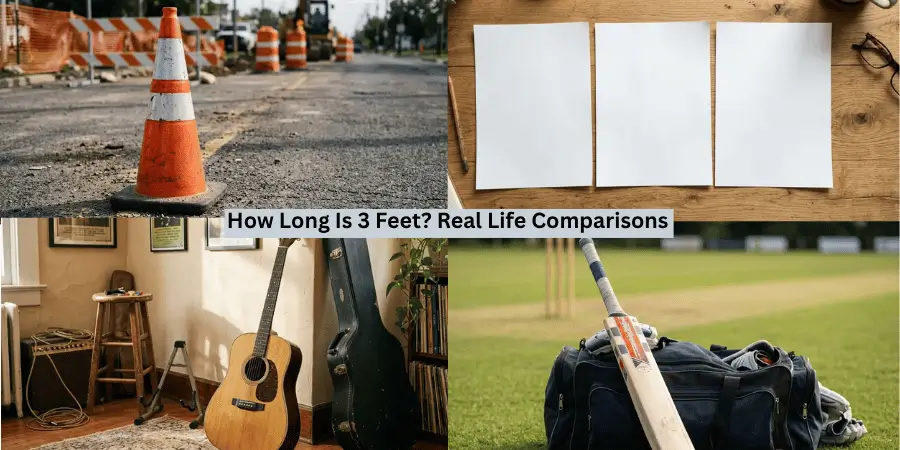
3 feet is the length of a yardstick, a standard acoustic guitar, a cricket bat, a traffic cone, a skateboard, and roughly the waist height of an average adult man. It appears in sports equipment, kitchen counters, doorway widths, and even a walking stick. From household furniture to a 3–4-year-old child’s height, this measurement quietly defines more of your surroundings than you’d expect.
3 feet = 36 inches = 91.44 cm = 0.9144 meters = 1 yard = 0.0009144 km
Things That Are About 3 Feet Long or Tall
- Three Standard Rulers
- Baseball Bat
- Acoustic Guitar
- Kitchen Counter Height
- Yardstick
- Standard Doorway Width
- Toddler / 3–4-Year-Old Child
- Half a Man’s Height / Waist Height
- Traffic Cone
- Skateboard
- Cricket Bat
- Coffee Table / Small Dining Table Width
- Three A4 Sheet Papers
- Golf Club
- Walking Stick / Cane
1. Three Standard Rulers

Most people overlook a surprisingly simple trick: place three rulers perfectly end-to-end, and you’ve built a 3-foot span without any specialized gear. Each standard ruler measures exactly 12 inches, equal to one foot, which means the combined length hits 36 inches precisely.
Found in schools, homes, and offices, rulers remain the most accessible and relatable measuring tool available to both students and working adults. Beyond educational tasks, they serve practical hands-on measurements in any classroom or work setting.
Read: What 10 Feet Looks Like In Everyday Life
2. Baseball Bat
A baseball bat offers one of the most instinctive ways to picture this measurement in athletic contexts. Adult players typically swing bats ranging from 34 inches up to 42 inches, while youth versions run closer to 24 inches, reflecting differences in age groups, skill levels, and height.
The standard professional MLB model sits right around 36 inches, putting it squarely within familiar territory. Wood bats dominate professional leagues, whereas aluminum versions gained popularity after 1970 for recreational games and Little League.
Swing mechanics depend heavily on balance between weight, diameter, and reach, because even small changes in length affect swing speed, control, power, and overall impact.
3. Acoustic Guitar

Few musical instruments communicate this length as naturally as an acoustic guitar. A full-sized guitar typically measures between 38 inches and 41 inches from headstock to body, while a 3/4 size guitar lands right at 36 inches, making it genuinely practical for children and young adults exploring early playability.
The hollow wooden body shapes both tonal balance and volume, influencing how musicians experience comfort during long performance sessions. Beginners and professionals alike reach for acoustics whether at a campfire or on stage, playing chords that resonate differently depending on design choices made by manufacturers since the 1590s.
4. Kitchen Counter Height
Walk into virtually any home across America and the kitchen counter will sit at exactly 36 inches from the floor, a height so universally adopted it has quietly shaped how people interact with their entire cooking environment.
This standard height wasn’t chosen randomly; it reflects genuine ergonomic thinking around food preparation, reducing unnecessary bending and reaching during daily tasks. Commercial kitchens follow the same logic, prioritizing both functionality and uniformity across a workspace. At roughly 91 cm, this comfortable surface accommodates most adults naturally.
Interior design professionals consistently reference countertop height when planning house design, accounting for counter thickness of about 1.5 inches above the structural base below.
Read: Common Objects That Are 2 Feet Long
5. Yardstick

A yardstick stands as one of the most reliable measuring tools ever designed, stretching exactly 36 inches from end to end. Unlike smaller instruments, its extended length lets you cover an entire one yard span in a single go, making it indispensable in schools, workshops, and offices worldwide.
Craftspeople, teachers, and professionals trust it for drawing lines, confirming lengths, and ensuring precision across carpentry and tailoring tasks. Its sturdiness and durability give users real confidence when working on detailed projects
6. Standard Doorway Width
Most people walk through doorways dozens of times daily without realizing how precisely that opening is engineered. Across the United States, a single exterior door typically spans 36 inches, meeting both comfort and accessibility standards simultaneously.
The ADA, or Americans with Disabilities Act, specifically requires this standard width to ensure wheelchairs and mobility devices pass through without obstruction. Beyond accessibility, furniture like sofas and tables practically demands this clearance during moves between bedroom, bathroom, and living room spaces.
Renovating older homes often means widening narrower entries to this optimal measurement. The doorknob itself sits at a convenient height, positioned so most adults can comfortably turn and hold it while entering.
7. Toddler / 3–4-Year-Old Child

A 4-year-old child standing beside a doorframe makes one of the most vivid real-world examples of this measurement in human growth. At this stage, most children reach approximately 36 inches tall, reflecting predictable patterns in early childhood development.
Balance, coordination, speech, and movement all evolve rapidly during these years, and height becomes a meaningful marker doctors track against standard growth charts. Parents reference this milestone when selecting clothes, toys, and furniture scaled for independence.
Using a basic wall chart or tape measure helps verify what can already be noticed visually. Interestingly, children typically double their birth height by age four, making this a genuinely healthy benchmark in pediatric observation.
8. Half a Man’s Height / Waist Height
The waist height of an average man offers one of the most intuitive body-based references for understanding this distance. In the United States, the American man stands around 5 feet 9 inches, meaning his hip sits almost exactly at 3 feet off the ground, representing precisely halfway up his full body.
Globally, the global average shifts slightly to around 5 feet 7 inches, influenced by ethnicity, genetics, race, and nutrition across different populations.
9. Traffic Cone

The orange cone is arguably the most universally recognized safety object on any road, and its height tells a precise story. Standard traffic cone sizes range from 18 inches up to 4 feet, but the most commonly deployed version on highway and freeway environments measures exactly 36 inches, offering maximum visibility during both daytime operation and night conditions.
A reflective strip wraps the upper section, cutting through dim light near active construction areas and building sites where road marking and delineation are critical.
Made from lightweight rubber or plastic, these movable cones manage traffic control efficiently, redirecting drivers away from hazards on low traffic roads and busy public spaces with equal road safety effectiveness.
10. Skateboard
The skateboard traces its roots back to the 1950s, when riders nailed roller skate wheels onto wooden planks to simulate surfing on pavement. Today’s standard deck measures close to 36 inches, giving both beginners and professionals enough surface for balance and control during tricks and daily transportation. The nose and tail shape influences speed and agility significantly.
Whether cruising casually or performing technical maneuvers, riders appreciate how this flat wooden board mounted on four wheels delivers genuine fun while maintaining consistent skating performance across varied surfaces.
11. Cricket Bat

A cricket bat carved from willow carries both tradition and serious athletic engineering. The full-sized bat runs approximately 36 inches, giving the batter enough reach and leverage to generate real power through the hitting zone. Unlike other sports equipment, the flat wooden bat design concentrates strength along a precise length, balancing weight and control simultaneously.
Serious players often display prized bats as collectibles, but on the cricket field, every millimeter matters. At nearly 4 feet for oversized versions, standard sizing remains the competitive benchmark where balance and performance genuinely decide outcomes.
12. Coffee Table / Small Dining Table Width
A small dining table sized at 3 feet wide fits surprisingly well into a compact apartment without sacrificing function. At this size, there’s enough room for two to four people to sit down together, so everyday dinners and small get-togethers still feel comfortable instead of tight.
The intimate setting encourages genuine conversation while keeping place layouts efficient across compact spaces. Modern dining design increasingly favors this measurement because it balances function and aesthetics without overwhelming smaller rooms.
13. Three A4 Sheet Papers

Here’s a measurement trick that almost nobody considers: align three sheets of standard A4 sheet paper perfectly end-to-end and the combined length reaches 35.07 inches, falling just one inch less than a full 3 feet.
Each sheet measures 8.27 inches by 11.69 inches, or 210 mm by 297 mm in metric terms. While not perfect, this method works surprisingly well for quick visualizing without any tools nearby.
14. Golf Club
Selecting the right golf club comes down to more than preference; length plays a decisive role in every shot. Drivers are the longest clubs in any bag, while putters, irons, and wedges each serve a specific purpose at varying lengths. The standard length for most clubs lands around 35 inches, sitting just under 3 feet, which suits golfers standing between 5 feet 7 inches and 6 feet 1 inch comfortably.
When club length aligns with a golfer’s natural stance, accuracy improves significantly. Both amateur and professional players understand that improper sizing affects posture, swing arc, and consistency across every round of sports competition.
15. Walking Stick / Cane
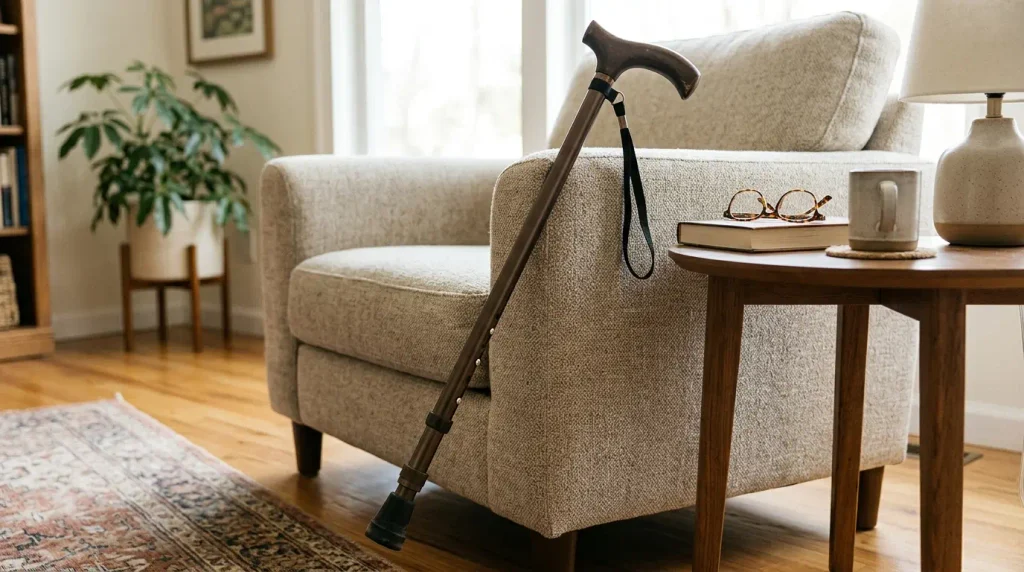
A properly fitted walking stick makes a measurable difference in daily mobility and comfort. Most medical supply stores recommend a walking cane between 32 inches and 37 inches for average-height users, with 36 inches being the sweet spot for relaxed walking assistance without straining the shoulder or wrist.
Correct length ensures optimal support and balance, reducing fatigue during extended use. Fitting matters more than most adults realize when first selecting one.
Faq’s
How Large Is 3 Feet When Converted To Inches?
3 feet equals exactly 36 inches. Since there are 12 inches in every foot, a simple multiply by three gives you the conversion instantly.
Does A Yardstick Measure Exactly 3 Feet?
Yes, a yardstick is exactly 3 feet or one yard in length. It is a dedicated measuring tool used across carpentry, construction, and tailoring.
Is A Standard Ruler Equal To One Foot In Length?
A standard ruler measures 12 inches, which equals exactly one foot. One side typically shows inches while the reverse side displays centimeters and millimeters.
What Length Do Baseball Bats Typically Measure In Inches?
Baseball bat sizes vary by player. Youth bats typically range from 24 inches to 30 inches, while adults use bats between 34 inches and 42 inches. Official rules limit the widest part of a bat to no more than 2.75 inches in diameter. Length, weight, and height all factor into choosing the right bat for proper swing performance.
How Can The Length Of 3 Feet Be Defined In Different Units?
3 feet equals 36 inches, 0.91 meters, or 91.44 centimeters depending on which unit system you use
How Can You Accurately Measure 3 Feet At Home?
Use a yardstick for the most direct result, or a tape measure pulled to the 36-inch mark. Alternatively, place three rulers perfectly end-to-end across a countertop or floor. You can also extend your arm from elbow to fingertips twice, since that span doubled approximates a full arm length home