Walking through your home, you brush past this measurement dozens of times without registering it. The cabinet beside your kitchen counter, the shelf inside your closet, the storage rail in your garage none of it feels remarkable until someone points out the dimension holding it together.
This piece gives you practical, real examples that permanently rewire how you visualize length in your daily surroundings. Once you see it, everyday objects stop looking ordinary and start revealing something genuinely useful about the space around you.
How Long Is 2 Feet?
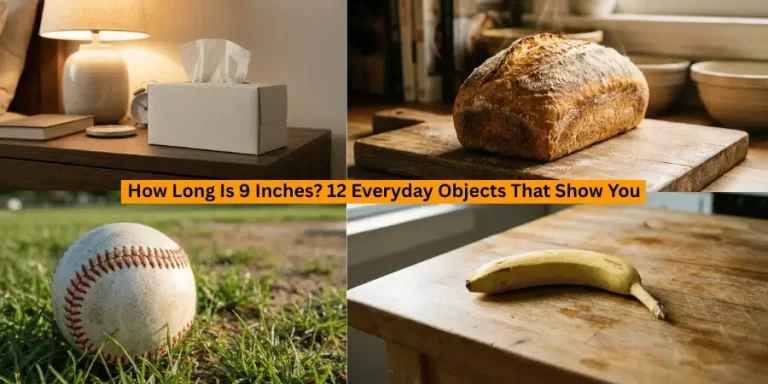
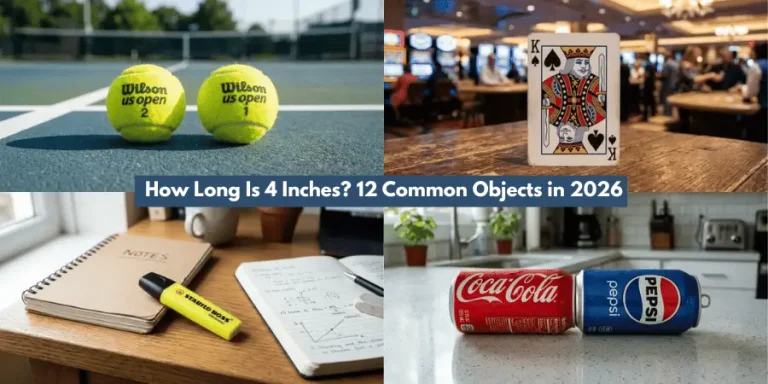
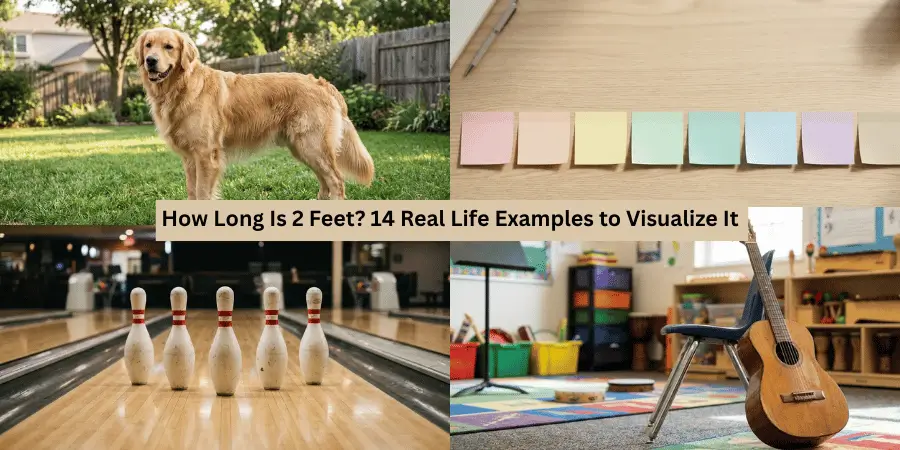
2 feet is one of those common lengths that shows up everywhere in American homes yet rarely gets recognized. A standard fireplace log, a 24-inch floor tile, a laptop backpack, a half-size acoustic guitar, a large pizza box, a spirit level, a cutting board, five bowling pins lined up, even a male Golden Retriever standing at the shoulder every single one confirms this dimension in the most practical, everyday way possible.
2 Feet = 24 Inches = 60.96 Centimeters = 0.6096 Meters = 0.6667 Yards = 0.0006096 Kilometers = 0.000379 Miles
Things That Are About 2 Feet Long
- Two standard rulers
- Standard fireplace log
- Large square floor tile
- Extra-large pizza box
- Male Golden Retriever
- Laptop backpack
- Half-size acoustic guitar
- Two-foot spirit level
- Standard casket interior
- Large kitchen cutting board
- Five bowling pins
- Eight sticky notes
- Two Subway-style footlong subs
- Average human footstep
1. Two Standard Rulers (End-to-End)

Place two 12-inch rulers end-to-end on any flat surface and you get an exactly 24 inches span that professionals quietly rely on more than people realize.
This approach works because the familiar ruler length, when doubled, gives students and professionals a precise reference without reaching for anything extra. Every classroom, office, and workshop already owns this tool making it perhaps the most widespread availability solution for quick checks.
What’s underrated here is the pure visualization it offers; there’s no guessing involved. For anyone estimating measurements in a home setting, this mental trick stays genuinely useful, and 2 feet becomes immediately concrete.
Read: how long is 3 feet in real life
2. Standard Fireplace Log
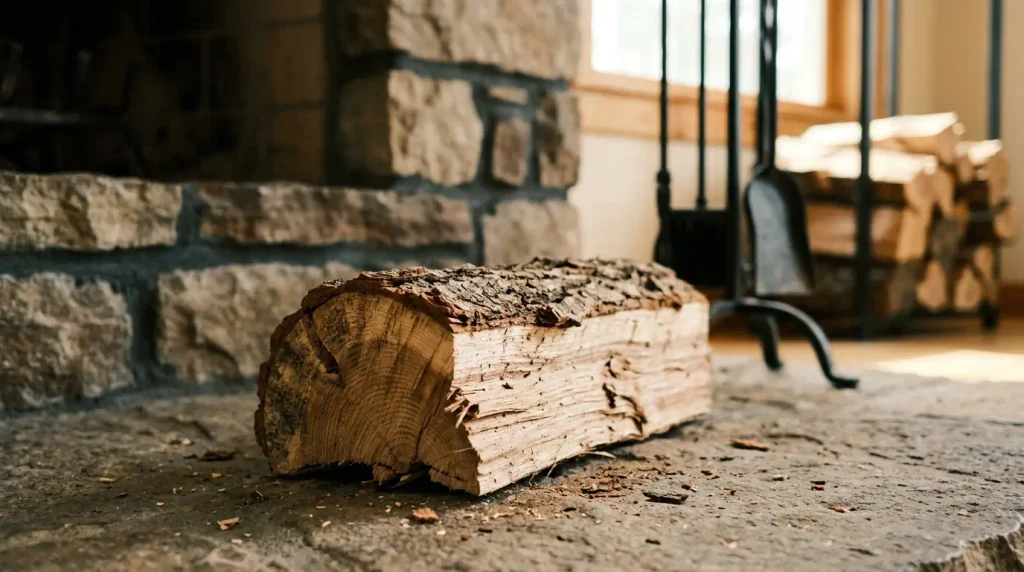
Every cord of firewood sold today reflects a supply chain decision made generations ago. Fireplace boxes, wood stoves, and fire pit inserts were built around one consistent interior dimension 24 inches because splitting and trimming logs beyond this created unnecessary waste during delivery.
Logging suppliers never advertised this logic, yet it quietly standardized residential firewood cutting across the entire industry. A 2-foot log drops in without adjustment, burns efficiently, and fits the fireplace opening the way it was always intended. That silent precision is what separates engineered design from coincidence.
3. Standard 24-Inch Floor Tile
Grout lines tell a story most homeowners never read. As renovation projects grew more design-conscious, contractors noticed that fewer grout lines made compact rooms breathe differently.
The 24×24 inch porcelain and ceramic floor tile format answered that demand directly delivering a cleaner, more open visual flow across bathroom, kitchen, and entryway floors without tricks. New home builds consistently list this 2-foot square as the preferred size over older 12-inch formats.
4. Large Pizza Box (Extra-Large)
Not every reference point needs to come from a hardware store. The large American pizza box — specifically the extra-large, party-size variety — lands between 20 and 24 inches, making it a surprisingly honest flat object for gauging square flat space.
Most people have held one through their front doors on a weekend delivery night and instinctively understood its size through their hands. What it looks and feels like in real life gives American households a genuinely familiar spatial anchor.
5. Golden Retriever Dog (Male)
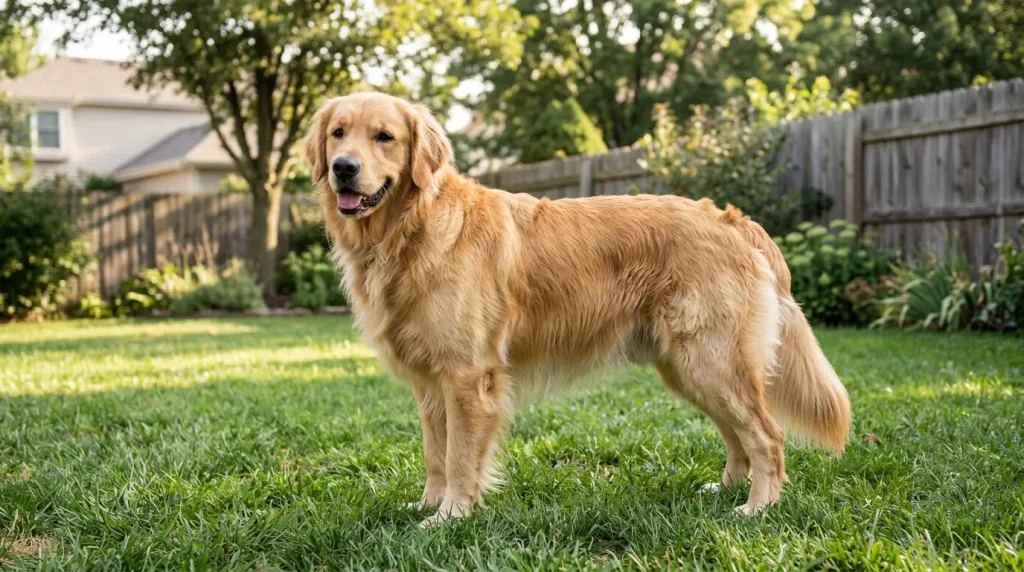
The male Golden Retriever reaches 24 inches at the shoulder by around 18 months, though many hit close to full height somewhere between 9 and 12 months. The female typically measures around 22.5 inches at the shoulder, sitting just slightly under.
What makes this breed such a reliable reference is how consistently the AKC documents their shoulder height across thousands of registered dogs. Their golden coats, friendly nature, and reputation as affectionate, loyal family pets make them the most lovable living size guide imaginable.
6. Standard Laptop Backpack
A full-size laptop backpack standing 24 inches in height carries more cultural weight than people acknowledge.
College students, commuters, and remote workers hauling 15 to 17-inch laptop bags through subway systems, campuses, and office buildings rarely stop to consider that this standard dimension was shaped around daily essentials textbooks, water bottle, and gear.
Airline personal item size restrictions were practically written with this 2-foot object in mind.
7. Half-Size Acoustic Guitar

Music educators rarely explain why the half-size acoustic guitar exists at roughly 2 feet in total body length from headstock to base. It was designed around a child’s lap and arm reach specifically for children aged 6 to 10 years old who cannot manage full-size 39-inch instruments comfortably.
Brands like Yamaha, Gibson, and First Act built their children’s models with this 2-foot scale as the benchmark. School music programs consistently recommend these as the ideal starter instrument for young beginners.
8. 2-Foot Spirit Level
Professionals who work with their hands know the 2-foot spirit level solves problems that longer levels simply cannot reach. At 24 inches, this hand tool fits inside cabinet interiors, window frames, and staircase risers where a larger level becomes impractical. Brands like Stanley, Empire, and Milwaukee built their torpedo and box-beam variants around this residential and DIY sweet spot.
Hanging pictures, installing shelving, leveling appliances, and managing cabinet bases during renovation projects all benefit from how naturally this light construction tool handles surface variations in tight spaces
9. Inside Width of a Standard Casket
Few people ever think about casket dimensions until necessity demands it. The inside width of a standard casket sits at 24 inches, a figure the funerary industry arrived at by studying average human height and weight distributions across large populations.
The outside dimensions run slightly bigger to accommodate structural materials, but the burial chamber itself holds firm at this standard size. What strikes professionals in this field is how consistently this industry standard has held across decades without significant revision.
10. Kitchen Cutting Board (Large)

Professional kitchens treat the 18×24 or 20×24 inches cutting board as a non-negotiable workspace. Home cooks and chefs working with large vegetables and meat portions understand that surface area directly affects how efficiently meal preparation flows.
The 2 feet standard dimension along the longer edge was shaped by practical chopping space needs rather than arbitrary sizing. What gets overlooked is sink compatibility; a board hitting this kitchen size can span most standard sink openings, doubling as a workspace extender.
Professional boards at this scale also reduce cross-contamination risks by giving home cooks genuine separation between ingredient workspace zones during complex cooking sessions.
11. Five Bowling Pins in Width
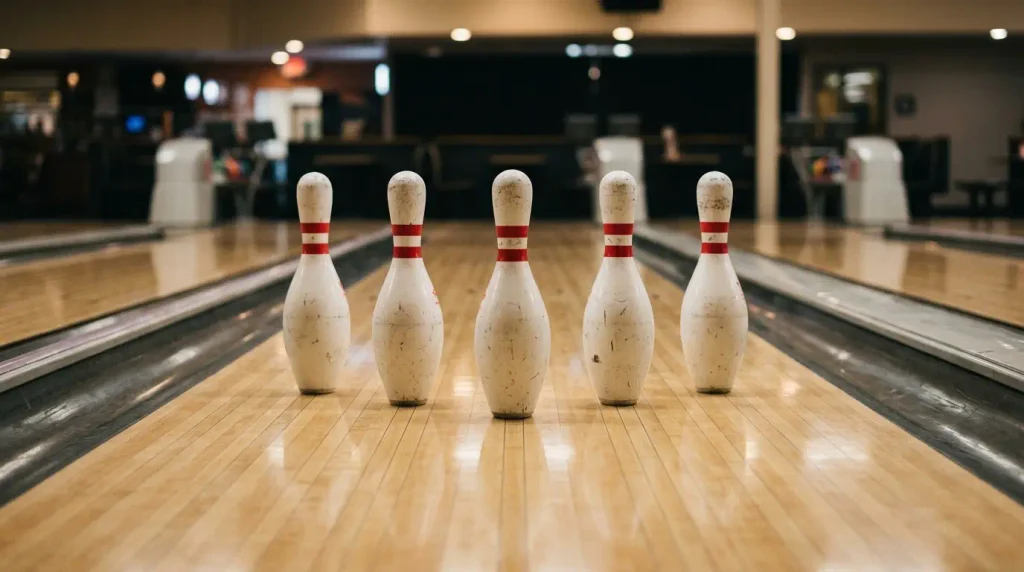
Most people picture bowling from the lane perspective, never considering what five pins lined side by side actually reveal about everyday scale. Each ten-pin bowling pin carries a diameter of 4.75 inches at its widest point, meaning five arranged horizontally reach 23.75 inches sitting just a breath under 2 feet.
USBC specifications confirm the tenpin stands 15 inches tall, crafted from sugar maple wood, and must meet certified width standards.
12. Eight Sticky Notes

Standard sticky notes measure 3 inches wide and 3 inches tall, which means laying eight notes side by side produces exactly 24 inches of total length. This turns an ordinary office supply into a surprisingly reliable impromptu ruler for small spaces where traditional tools feel excessive.
Interior decorators use this trick for picture frame placement without pulling out measuring tape. During craft projects and workspace organizing, this method offers quick distance checks that feel intuitive rather than technical.
13. Two Subway Subs
Food has always offered the most democratic size reference points, and the Subway Footlong proves this better than most. Each Footlong runs 12 inches in length, so combining two places end to end creates a duo that spans exactly 2 feet across any kitchen counter or party spread.
Whether you’re working with four six-inch portions or two complete subs, the food geometry stays consistent. What people overlook is how naturally this everyday sandwich trains spatial awareness around the foot dimension without any technical effort.
14. Average Human Footstep

Walking pace reveals more about human scale than most people consider. Research from the University of Oklahoma Health Sciences Center documented that a woman’s step averages 2.20 feet, producing a stride of 4.30 feet, while a man’s step reaches 2.60 feet with a stride of 5.20 feet.
These figures shift based on gender, height, and walking style, with average speed sitting near 1.3 m/s. A typical men’s footstep length approaches 30 inches or 0.76 meters, while women average closer to 25 or 26 inches.
Conclusion
Most people underestimate how often 2 feet appear in everyday surroundings without being recognized. From residential flooring and firewood to kitchen workspace and familiar pets, this dimension shows up across American homes, offices, and garages in remarkably practical ways.
The common objects explored here weren’t chosen randomly; they reflect how deeply this length is woven into daily experiences. Once you visualize it through things you already own and use, measurements stop feeling abstract and start feeling genuinely intuitive across every living space you occupy.
Faq’s
How Many Inches Are In 2 Feet?
24 inches. One foot holds 12 inches, so 2 multiplied by 12 gives you 24.
What Length Does 2 Feet Equal?
Beyond 24 inches, it sits at 60.96 centimeters and 0.6096 meters.
What Is 2 Feet In Centimeters?
Exactly 60.96 centimeters, rounded to 61 cm for most practical purposes.
What Symbol Is Used To Represent 2 Feet?
2′ uses a single apostrophe for feet. Written formally, 2 ft works equally. Combined with inches, the notation reads 2’6” or 2 ft 6 depending on context.
How Can You Measure 2 Feet Without Using A Tape Measure?
A 2-foot spirit level lives in most hardware stores and doubles as an instant reference tool. Two 12-inch rulers connected end-to-end cost nothing extra if you already own them. Less obviously, a 24-inch cutting board, a standard floor tile, or a laptop backpack laid flat all carry this dimension physically.
Your forearm from elbow to fingertips gives a reasonable approximate length for quick estimates when nothing else is available. The point is exact sizing tools are rarely necessary when the objects around you already carry the answer.